
Custom Leggings with Logo: Placement, Labels & Branding Options
For custom leggings with logo, approve the position, finished artwork size, decoration method and label system together. A logo that looks right on a flat mockup still needs to work when the garment stretches, the waistband folds and the customer follows the care instructions.
At Bloomto, we help activewear brands develop branding alongside the garment—not as a last-minute addition. Use this guide to prepare a clearer brief, compare logo options and decide what your approval sample needs to demonstrate.
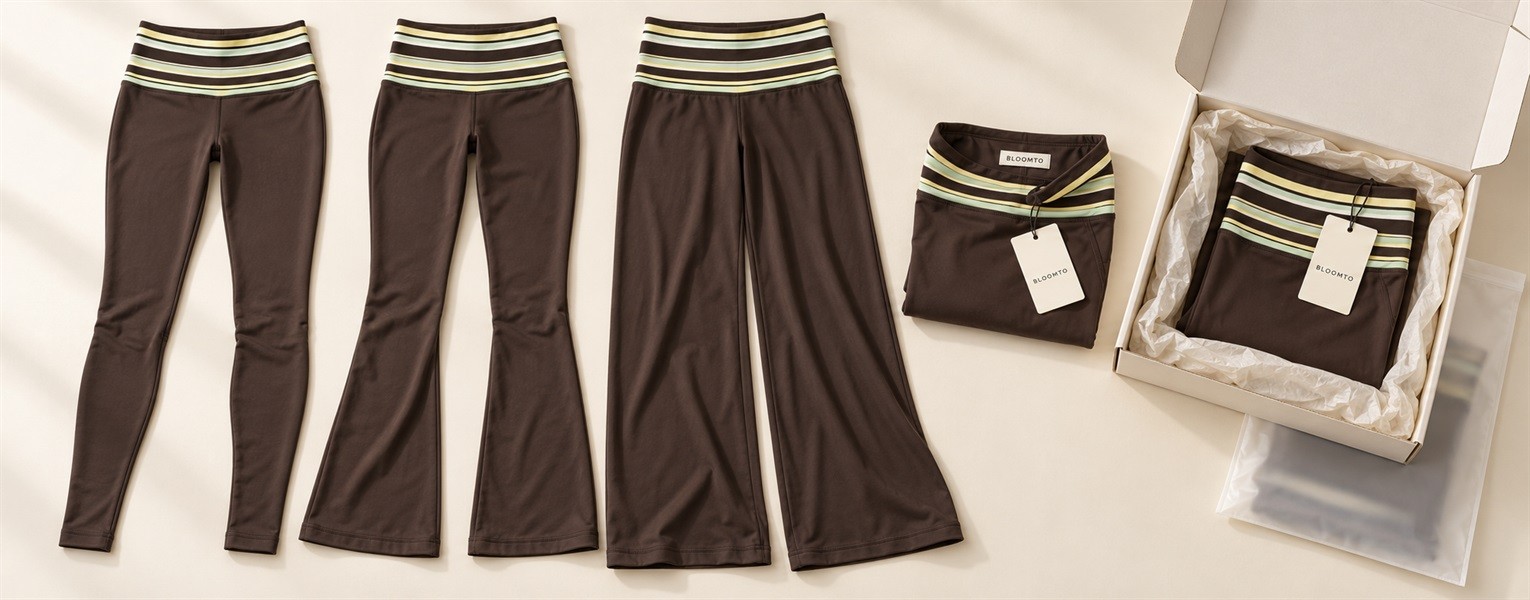
Why brands order custom leggings with logo
A consistent logo position can connect different silhouettes within one collection. Labels and packaging then carry the same identity through the customer experience. But consistency does not mean copying one placement onto every style: a high waistband, side pocket or flared hem changes the available space.
Start with the use case. A studio collection may suit discreet branding; an instructor line may need recognition from a distance. Neither approach guarantees stronger sales. The practical goal is a recognizable design that remains readable and comfortable in its intended setting.
Logo placement options for custom logo leggings
Use these four zones to start the discussion. The diagram is illustrative, not a production pattern or a set of standard measurements.
A · Upper hip or thighConfirm the wearer’s left or right side. Check clearance from pockets and seams.
B · Lower legReview visibility above footwear and how the position changes on cropped or flared styles.
C · Rear waistbandCheck whether a top covers the mark or a folded waistband changes its appearance.
D · Inside waistbandConsider brand and size information, skin contact and readability after care.
Specify placement from a repeatable reference: the finished waistband edge, center-back seam or another defined construction point. State whether the measurement reaches the logo’s edge or center, and whether the garment is measured flat and relaxed. “Near the hip” leaves too much open to interpretation.
A measurable placement brief
Illustration only—not a Bloomto production standard: a wordmark measures 40 × 12 mm, is centered on the back waistband, and has its top edge 20 mm below the finished waistband edge on a flat, relaxed garment. These numbers define one example; they do not establish a suitable size or tolerance for every style.
Ask the factory to confirm feasibility, measurement tolerance and whether placement stays fixed or changes across sizes. Approve the same written dimensions on the sample.
If the silhouette is still open, explore our yoga leggings styles and identify a clear logo zone before finalizing the artwork.
Printed, woven or rubber-style logos: what changes?
Compare the complete construction, not just the appearance. “Printed logo” covers different systems; “rubber logo” does not identify a specific polymer or attachment method. Ask for the proposed material and process in the quotation.
| Method | Design opportunity | Sample checks | Quote drivers |
|---|---|---|---|
| Stretch-compatible heat transfer | Low-profile wordmarks or variable names, subject to the selected transfer system. | Adhesion, stretch recovery, edge lifting and possible dye migration. | Artwork area, material, colors and application operations. |
| Screen or silicone printing | Flat or raised effects, depending on ink and process. | Ink compatibility, curing, cracking and feel on the actual fabric. | Setup, colors, coverage and print locations. |
| Woven label | A separate brand tab with a textile texture. | Small-text clarity, edge comfort, fold and sewing position. | Dimensions, yarn colors, fold, quantity and attachment. |
| Molded silicone or rubber-style patch | A dimensional badge where thickness suits the design. | Specified polymer, flexibility, attachment strength and skin contact. | Tooling, dimensions, colors and attachment method. |
| Embroidery | A stitched texture where the garment construction supports it. | Puckering, backing comfort and distortion during stretch. | Stitch count, artwork complexity and backing needs. |
No row is automatically the cheapest or most durable. Quotes become comparable only when fabric, artwork size, quantity, placement and approval requirements are aligned. This table describes options to evaluate, not a guarantee that every method suits every Bloomto style.
STAHLS’ performance-wear handbook explains that print coverage influences hand feel on lightweight performance fabrics and recommends testing for dye migration. That supports a practical design decision: evaluate both a solid badge and a more open wordmark on the selected fabric rather than choosing from a digital mockup alone.
For the broader differences between decoration processes, see our custom leggings printing methods comparison.
Plan labels and packaging as one branding system
Separate what each component must do. The external logo identifies the collection; an internal brand or size mark helps the wearer; care and composition information serve another purpose. Hangtags and packaging add presentation, but should not be treated as automatic substitutes for required garment labeling.
Avery Dennison’s permanent-branding portfolio distinguishes woven labels, printed fabric labels and internal heat transfers. The useful takeaway is that an external logo and an internal label need not use the same construction. Choose internal details for their contact with the wearer as well as their appearance.
For example, U.S. FTC guidance says most covered textile products need fiber content, country of origin and the identity of the manufacturer or another responsible business. Its separate care-labeling guidance addresses care instructions and label permanence. Confirm the applicable requirements with your importer or compliance adviser; this is not a complete labeling checklist.
Need help choosing a logo position?
Send your artwork and a reference leggings style. Tell us the fabric, intended use and quantity so we can discuss placement, decoration and label options together.
Send Your Logo to BloomtoCustom names and text: plan the variable details
For a team or instructor collection, separate the fixed brand logo from variable names. One shared logo file does not control spelling, accents, garment sizes or packing assignments. Supply a roster that pairs each approved name with a size, color and quantity.
Approve the longest name at actual size and define what happens when another name exceeds the available width: smaller lettering, a second line or a different location. Do not leave those changes to the production operator. Confirm proofs before releasing personalized units.
For custom text leggings, check punctuation, line breaks and readability while the garment is worn. A phrase running down the leg interacts differently with stretch and seams than a short waistband wordmark. Use original or authorized artwork and text.
Keep one approved roster as the production reference. If names change after proof approval, issue a clearly dated replacement rather than corrections scattered across messages. The packing list should preserve the connection between each personalized garment and its intended recipient.
Bulk personalization is different from a one-off gift service. A project may combine a garment minimum, decoration setup and variable-data handling. Ask about feasibility and costs together; do not assume that an individually named item has the same ordering conditions as a standard bulk logo.
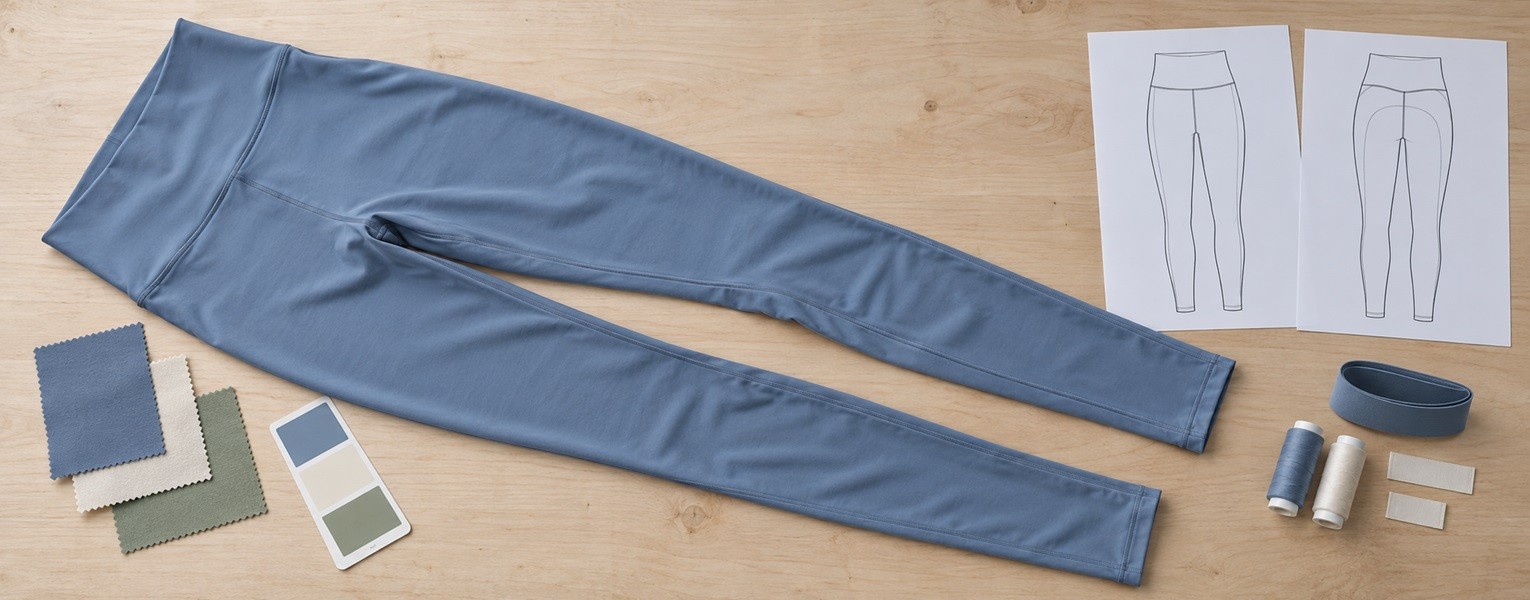
Artwork requirements for logo-ready leggings
Send the logo artwork with a placement sheet, not only a lifestyle mockup. A production brief should include:
- Usable artwork: preferably a vector PDF, SVG or AI file when the selected supplier accepts it. Outline lettering for output and retain an editable master.
- Finished dimensions: width, height, orientation and placement references in a stated unit.
- Color and effect: a named color reference plus the intended flat, raised, matte or glossy finish. Confirm the physical result on fabric.
- Production variants: fabric colors, garment sizes, logo versions and any approved name roster.
A vector file can still contain details too fine for a process. Ask for the minimum line width and text size for the proposed method rather than applying one universal rule. Our leggings tech pack and sampling guide explains how to connect artwork to the garment specification.
Approve the logo on the garment—not just the screen
Use an approval sample in the intended fabric and color to resolve these checks before bulk production:
- Position and scale: measure from the agreed references and review representative garment sizes.
- Movement and comfort: assess appearance during wear, local stiffness and any label or backing contact.
- Care performance: agree the procedure, conditions and acceptance criteria; inspect lifting, cracking, color change and distortion afterward.
- Branding accuracy: verify spelling, label content, artwork version and matching hangtags or packaging.
- Approval record: retain the approved sample and specifications, and identify changes that require re-approval.
A photo cannot establish wash durability. Ask what was tested and under which conditions; avoid turning an unspecified “wash-tested” claim into a promised garment lifespan.
For reorders, check what has changed since the approved batch. A different fabric finish, dye color, transfer material or logo dimension can justify another compatibility review. Keep the artwork version, construction details and approval record together so that “same logo” does not accidentally become a different decoration specification.
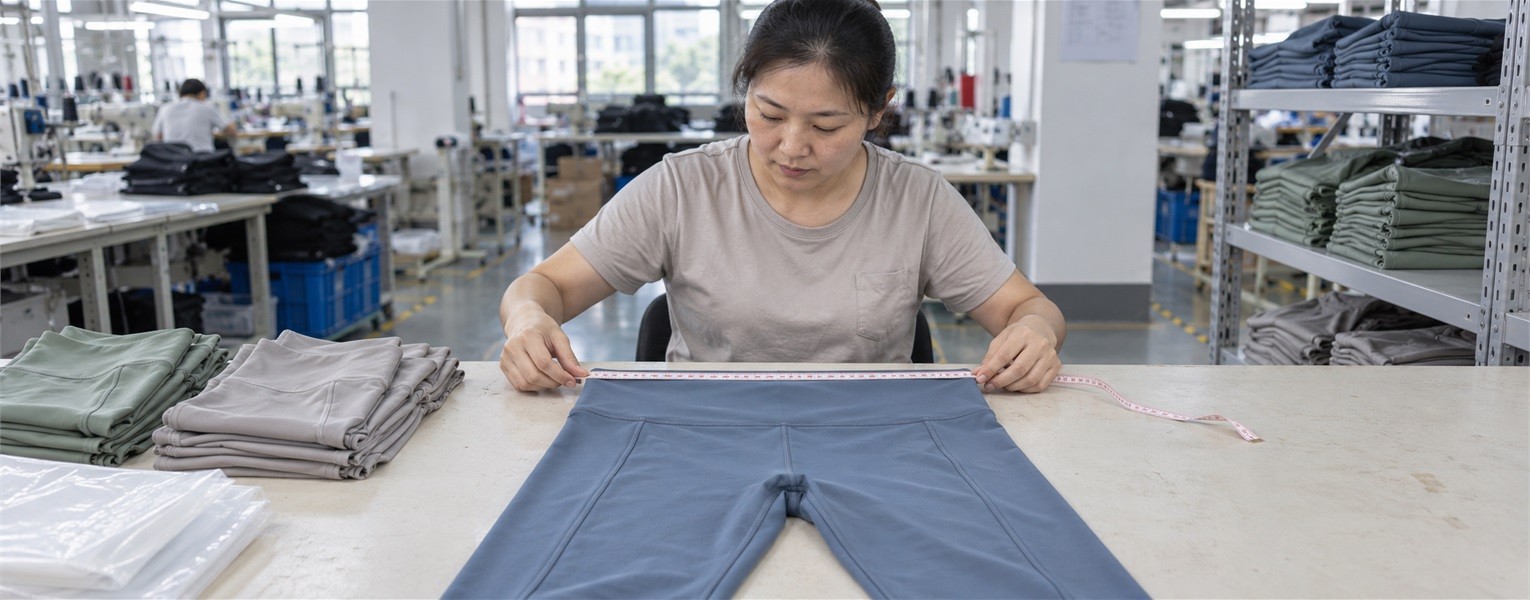
Work with Bloomto on a complete branded product
Our custom leggings manufacturing support includes branding options such as heat transfer, silicone printing, embroidery, labels, hangtags and packaging. We review the proposed combination for your project rather than treating the logo as a separate purchase.
Through our sportswear design and sampling support, we can help connect your concept with technical details, fabric selection, fit development and sample revisions. Bring a clear brief or reference images; confirm minimum quantities, sampling arrangements, testing scope and timing for the specific design.
Frequently asked questions
What file format is best for a leggings logo?
A clean vector file is usually a useful starting point, but the decoration supplier should confirm its requirements. Include finished dimensions and a placement sheet. Converting a low-resolution image into a PDF does not make it production-ready vector artwork.
Can I order personalized name leggings in a small quantity?
Send Bloomto the total quantity and number of unique names for a feasibility review. Garment production and personalization can have different minimums and setup costs. We do not assume that a one-off gift order is supported without checking the project.
Make your logo part of a production-ready brief
Share your logo, preferred leggings style, fabric idea, target quantity and sales market. Add any names, label or packaging requirements. Contact Bloomto to discuss placement, suitable branding options and the next sampling step.
Discuss Your Custom Logo Leggings
