
Custom Print Leggings: Printing Methods Compared for Quality & Cost
The best printing method for custom print leggings depends on the fabric, artwork coverage, stretch demands and order quantity. Dye sublimation is a strong starting point for all-over artwork on suitable light-colored polyester fabrics. Screen printing, stretch heat-transfer vinyl and DTF are alternatives for placed graphics, provided the chosen system works with the actual garment.
A beautiful digital mockup is only the starting point. Your print also needs to look right when the leggings are worn, stretched and washed. At Bloomto, we help connect your design idea with fabric selection, sample development and the specifications needed for production.
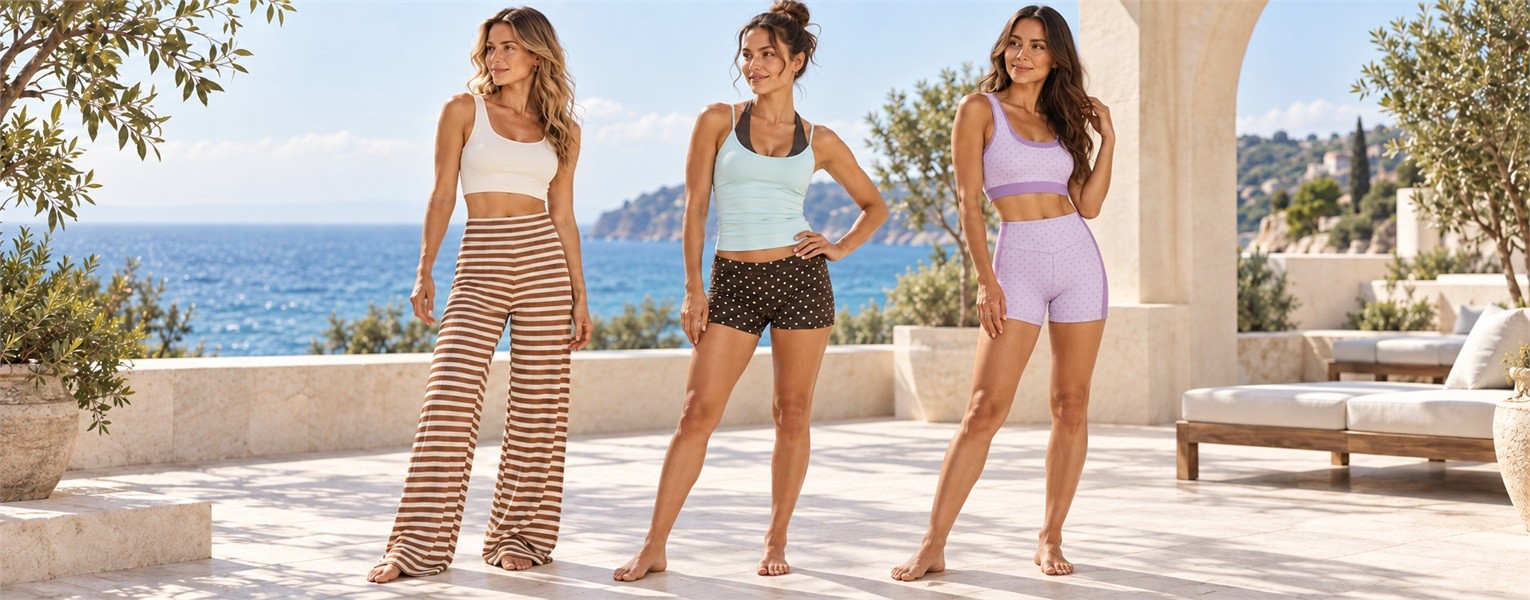
Give the print a clear role in your collection
A signature stripe, a seasonal floral or a small studio mark can serve different brand goals. Decide whether the artwork should be the main visual feature or a subtle identifier. That decision helps define coverage, placement and how the leggings coordinate with tops or sports bras.
For example, an all-over collection brief starts with the relationship between pattern and silhouette. An instructor capsule might instead need a modest placed graphic across an existing style. Neither brief automatically calls for the same printing route, even when the order quantities match.
Keep the wearer in the decision: where will the fabric bend most, and how much printed surface will touch or cover a high-movement area? Treat visual identity, comfort and production feasibility as separate approval points. Printing can express the brand; it cannot by itself guarantee customer demand.
Which printing method should you consider first?
Start with the product brief, not a price ranking. For full-leg patterns, investigate a fabric-printing route before cutting and sewing. For a localized logo or graphic, compare compatible screen-print and transfer options. If the fabric is already fixed, eliminate unsuitable processes before asking for quotations.
“Heat transfer” describes a family of processes: DTF and transfer-paper sublimation both use heat. The comparison below separates four practical production routes, rather than treating those terms as mutually exclusive technologies.
Custom printed leggings: four production routes compared
Use this table to shortlist options. It is a buying framework, not a guarantee that every ink, transfer or fabric within a category behaves the same way.
| Production route | Useful starting brief | Main quality checkpoint | Cost drivers to compare |
|---|---|---|---|
| Dye sublimation | All-over patterns or gradients on suitable white or light polyester-rich fabric | Color on the selected base; appearance under stretch | Printed area, fabric yield, sampling and panel alignment |
| Direct screen printing | Repeated placed graphics, especially artwork with a limited color count | Ink flexibility, curing and dye migration | Screens, color separations, underbase, locations and quantity |
| Cut heat-transfer vinyl (HTV) | Simple lettering, logos or selected decorative effects | Compatible stretch grade, adhesion and edge appearance | Film usage, cutting, weeding and application time |
| Direct-to-film (DTF) | Full-color placed graphics, including trial collections | Transfer flexibility, hand feel and adhesion on the actual fabric | Transfer area, sheet utilization, application and testing |
1. Dye sublimation: plan the fabric and the artwork together
Sublimation dyes the textile rather than adding a separate vinyl film. Epson’s textile-printing primer identifies white or light-colored polyester and predominantly polyester blends as suitable starting materials. This makes the route worth considering for custom all over print leggings with gradients, repeat patterns or large coverage.
Do not assume the same artwork will reproduce identically on a different blend or base shade. Approve a printed fabric sample, then assess the finished leggings under realistic stretch. A process without an adhesive film still does not guarantee opacity, correct color or a particular service life.
2. Screen printing: assess the ink system, not just the method name
Direct screen printing is worth pricing for repeated graphics. Artwork separations and screens create preparation work, so the number of colors and print positions matters alongside quantity. Ask whether an underbase or dye-blocking layer is included in the quote.
Stretch fabrics need a suitable ink system and controlled curing. Avient lists performance inks intended for garments containing elastane and warns that poor curing can cause cracking or wash failures. Its guidance also identifies dye migration from polyester as a production risk. Screen printing is therefore neither automatically unsuitable for leggings nor automatically durable on every fabric.
3. Stretch HTV: useful for focused branding
Cut HTV starts with a film design that is cut, weeded and heat-applied. It can be practical for simple brand marks or lettering when the selected material is compatible with the garment. Intricate artwork introduces more weeding and handling; multiple layers also deserve a comfort check.
STAHLS’ performance-wear guidance distinguishes materials intended for stretch applications. Request the specific film grade, not simply “heat transfer.” Review the print while worn and after care testing, especially where the garment stretches most. A small transfer and a large solid panel should not be assumed to feel the same.
4. DTF: full-color graphics with application requirements
DTF prints an image onto film and uses an adhesive system to attach it to the garment. Epson’s process guidance describes hot-melt powder and heat pressing, with settings determined by the film manufacturer. Unlike cut HTV, conventional DTF does not require cutting and weeding each colored shape.
This makes DTF worth investigating for detailed, multicolor placed graphics. However, “works on many fabrics” is not proof of suitability for your nylon-elastane leggings. Confirm the exact transfer system, test adhesion and recovery, and assess coverage-related hand feel before approving production.
Compare costs using the same specification
A low print price is not meaningful if one quotation covers a small logo and another covers both legs. Give each supplier the same fabric reference, artwork dimensions, print locations, color requirements, quantity breakdown and sample expectations. Ask what changes when the order is split across designs.
Separate one-time preparation costs from repeat production costs. Include artwork preparation, screens or transfer preparation where applicable, print application, sampling, agreed testing and any alignment-related fabric allowance. Compare the complete garment specification before deciding which route offers better value.
What happens to a fixed setup charge as quantity increases?
Suppose one unchanged design has a $120 setup charge. Allocating that same charge across different quantities gives:
Setup cost per unit = $120 ÷ printed units
| Printed units | Total setup charge | Setup per unit |
|---|---|---|
| 100 | $120 | $1.20 |
| 300 | $120 | $0.40 |
| 1,000 | $120 | $0.12 |
The setup portion becomes smaller per unit; the total setup charge does not change. This explains why quantity can influence a comparison, but it does not prove that a particular method is cheapest or that ordering more is commercially sensible.
Illustration only—not a Bloomto quotation or market price. These figures exclude fabric, sewing, print application, testing, packaging, freight and taxes. Actual setup charges and production costs depend on the project.
Need a comparison for your own print?
Send us your artwork, preferred fabric, approximate print size and planned quantities. Bloomto can review the development requirements and discuss a suitable sampling direction before you commit to bulk production.
Discuss My Printed Leggings ProjectCheck color, stretch and washing separately
“High quality” needs a definition that your team and the manufacturer can both use. A good-looking print can still fail a different requirement. Specify the checks and acceptance criteria before the sample is approved.
- Color and detail: compare the physical print with an agreed reference under consistent lighting. Inspect fine lines, repeat edges and the lightest and darkest parts of the artwork.
- Stretch and recovery: examine the garment relaxed and worn. Check for exposed pale areas, cracks, lifted edges or lasting distortion. A hand pull is a useful screen, not a quantified laboratory result.
- Washing and appearance: agree the care conditions and evaluation points. Review color, print edges, adhesion and garment appearance; a colorfastness result alone does not answer every durability question.
- Rubbing: assess whether color transfers to another surface. AATCC TM8 addresses dry and wet rubbing; it answers a different question from washing.
A useful test number—and its limit
AATCC’s public TM61 scope states that a 45-minute accelerated test roughly approximates the fabric color loss and surface changes associated with five typical hand or home washes under its specified conditions.
This is not a five-wash lifetime guarantee for a printed garment. It does not establish how long a transfer will remain attached, or justify multiplying a test duration into a universal wash-life claim. Ask for the method, conditions, result and acceptance criteria together.
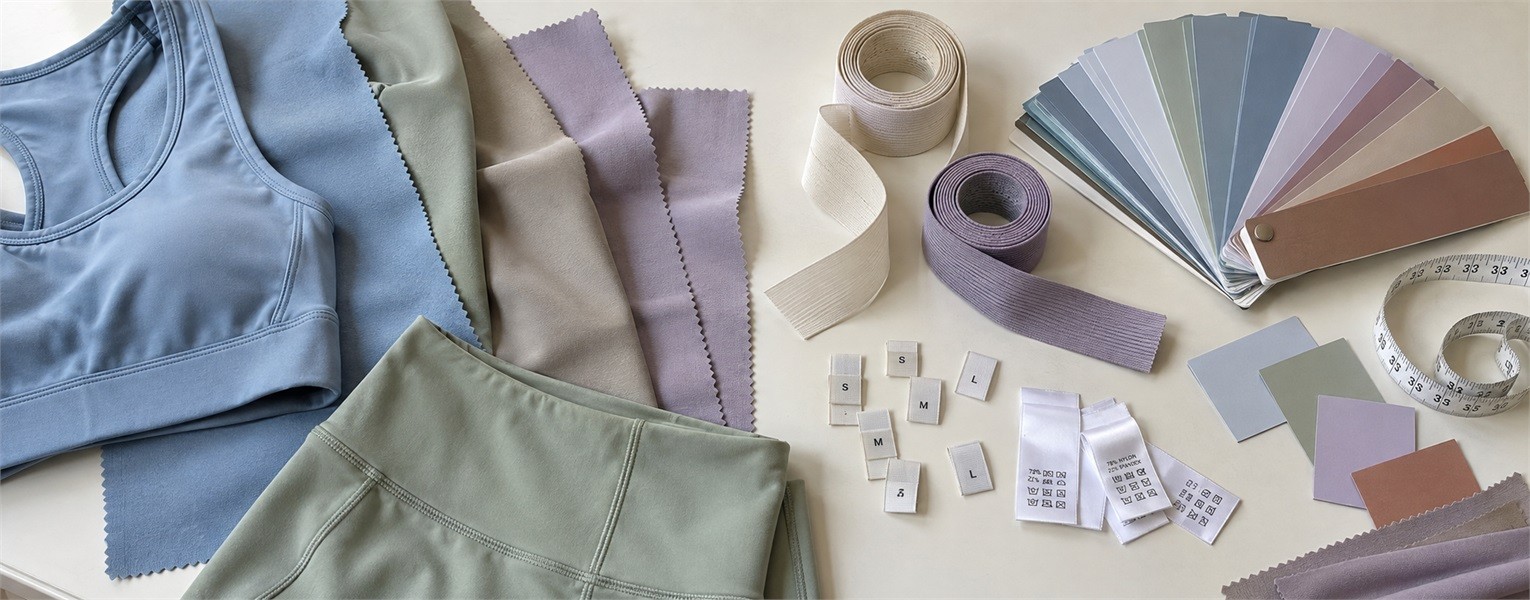
Prepare all-over artwork for a sewn, three-dimensional garment
Custom printed tights are not flat posters. A repeat that looks balanced on screen can land differently around the waistband, crotch and side seams. Decide whether the design should repeat freely or place particular motifs in fixed positions.
For panel-based printing, review artwork against the production pattern and size range. Identify important matching points, seam allowances and areas where text must remain readable. Ask the development team to define achievable alignment tolerances; do not assume perfect stripe matching across every seam and size.
Keep a clear file version, final artwork dimensions and approved color reference. Request the printer’s file requirements before exporting. Our custom leggings design and tech pack guide explains how to organize the wider specification without relying on a mockup alone.
Order samples that answer production questions
Begin with a strike-off—a small print trial on the intended fabric—to evaluate color and detail. Then review a finished garment to understand fit, print placement and behavior under stretch. Neither step fully replaces the other.
- Define the product: intended use, base style, size range, fabric composition and hand-feel priorities.
- Define the artwork: file version, colors, repeat or placement, dimensions and the locations to print.
- Define the order: expected units by design and color, budget priorities and target launch window.
- Define the checks: agreed color reference, stretch assessment, care conditions and any required laboratory tests.
- Record approval: retain the approved sample and written changes, and confirm what requires re-approval if the fabric, artwork or print system changes.
If you are still choosing the silhouette, browse our yoga leggings styles and tell us which features you want to retain or change. This gives the sampling discussion a concrete starting point.
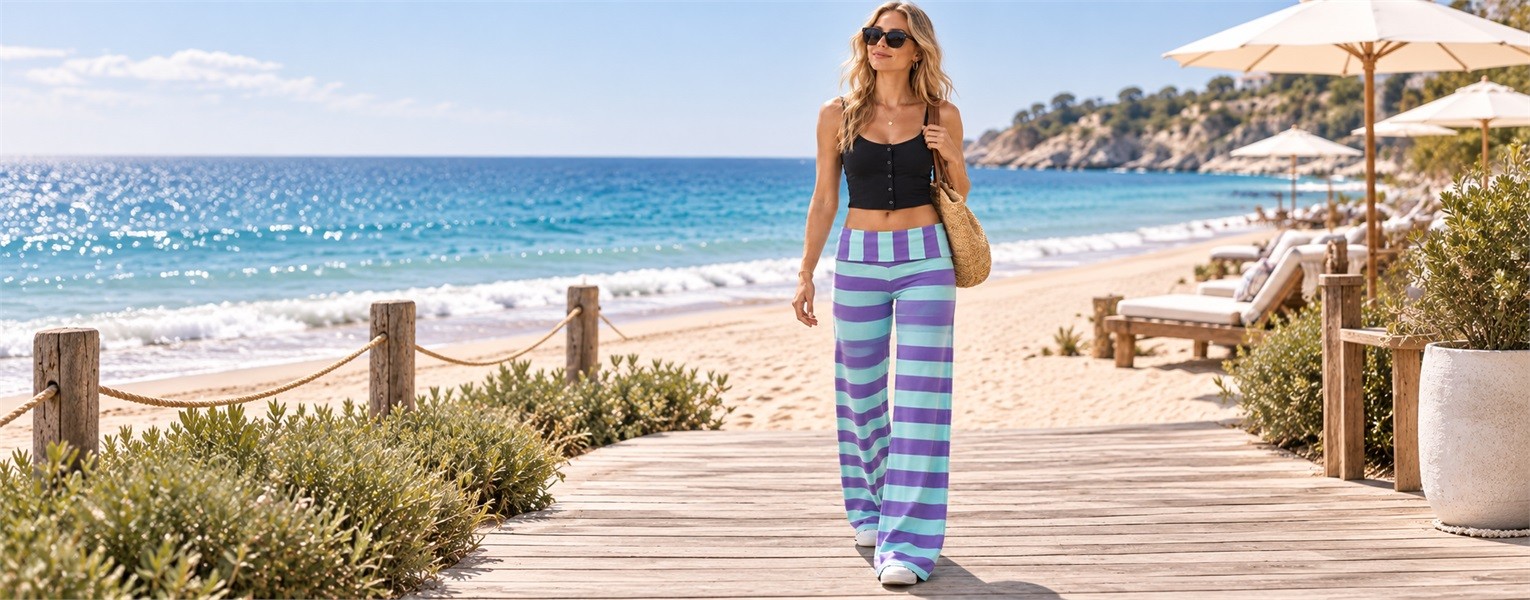
Build your printed leggings collection with Bloomto
Choosing a printed leggings manufacturer means choosing development support as well as a decoration process. We can help with concept sketches, tech packs, pattern and fit development, fabric and color selection, sampling and revisions through our sportswear design support.
For your print project, bring us the artwork and the product priorities together. Our custom leggings manufacturing support covers printed and branded styles, with project details reviewed before sampling and production. We can discuss which elements need development and what should be confirmed on the approval sample.
You do not need a finished technical pack to start the conversation. Reference images and a clear brief are useful starting points. Sampling arrangements, method availability, minimum quantities, testing scope and timing should all be confirmed for your specific design.
Frequently asked questions
Which print lasts longest on leggings?
There is no universal winner independent of fabric, ink or transfer system, processing and care. Sublimation avoids an adhesive film, while screen prints and transfers need suitable flexibility and bonding or curing. Compare sample results against the same intended use and care requirements.
What is the minimum order for custom print leggings?
The garment, fabric and print processes can have different minimums. A low minimum for transfers alone is not a finished-legging MOQ. Send Bloomto quantities by design and color so we can confirm feasible options and a project-specific quotation.
Can I print on an existing nylon-elastane fabric?
Possibly, but do not assume that a process suitable for polyester will transfer directly. Share the fabric details or a swatch and ask for a compatible ink or transfer system. Approve testing on the actual material before committing to production.
Turn your artwork into a sample you can evaluate
Send Bloomto your print idea, preferred leggings style, target quantity and launch plan. Tell us whether color, hand feel, all-over coverage or budget is your main priority. We will help you discuss the next steps for a manufacturable printed collection.
Contact Bloomto About Custom Prints
