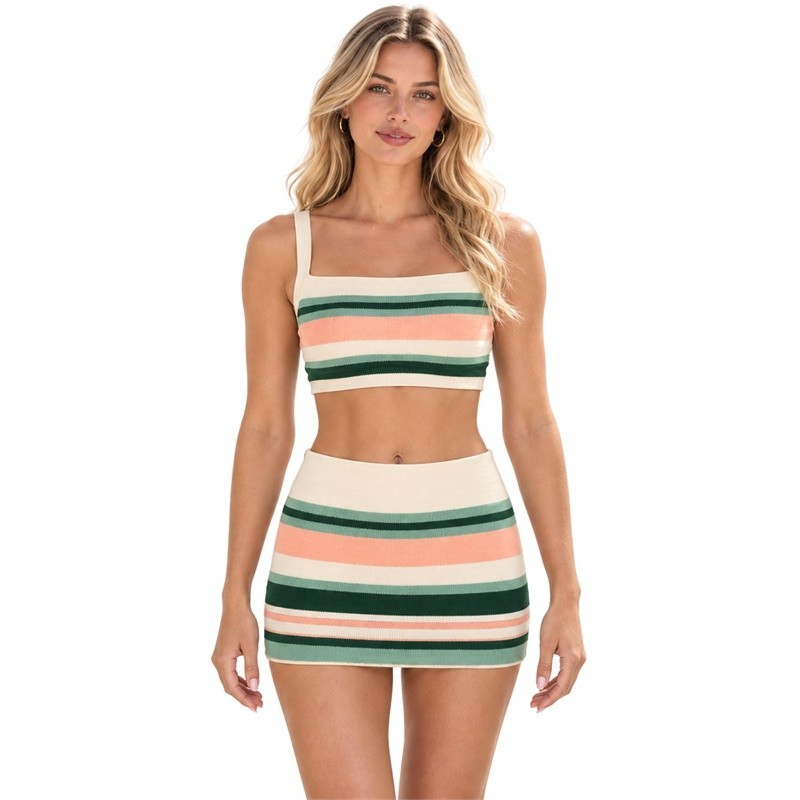
2027 Activewear Design Details: Prints, Textures & Statement Finishes
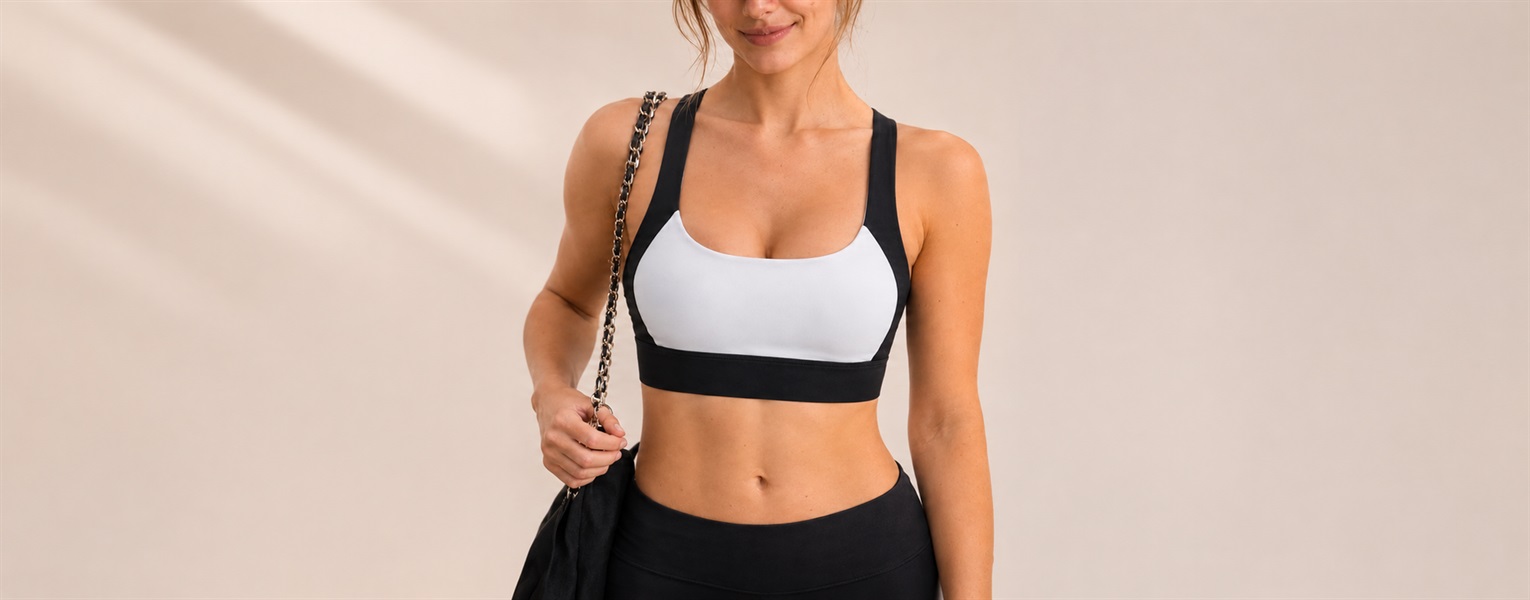
In today's competitive activewear market, a great product is about more than just a flattering silhouette. Small design details can make a significant difference in how a garment looks, feels, and stands out from competing products.
From distinctive prints and textured fabrics to contrast stitching, decorative panels, and personalized logo applications, thoughtful design details help brands create a recognizable visual identity.
As activewear continues to evolve in 2027, brands have more opportunities to move beyond basic leggings and sports bras by experimenting with fabric surfaces, subtle patterns, and carefully selected finishing details.
Whether you are developing a premium yoga collection, a Pilates-inspired range, or a fashion-forward women's sportswear line, understanding these design directions can help turn simple activewear essentials into distinctive products.
In this guide, we explore seven activewear design detail trends worth watching in 2027, covering prints, textures, color combinations, garment construction, and customization ideas for your next collection.
Treat these as design directions to validate with your customers, rather than confirmed forecasts of future demand. Browse activewear industry trends for related collection-planning ideas, and the custom women's activewear collection for product references.
1. Statement Prints: Bringing Personality to Activewear
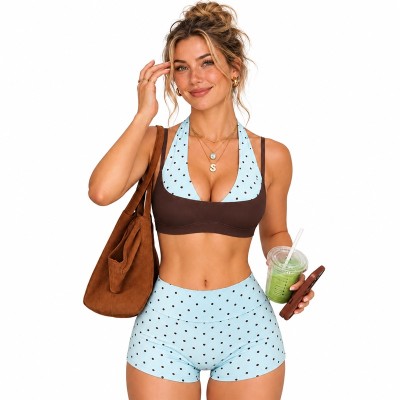
Prints are an effective way to introduce personality and visual interest into activewear collections.
While minimalist solid-color designs remain important, distinctive patterns offer brands another way to create products that are immediately recognizable.
For 2027, brands can explore a balance between expressive patterns and more refined, wearable designs.
Geometric Prints
Geometric patterns use shapes, lines, and repeated elements to create structured visual effects.
Design Ideas:
- Repeating geometric shapes.
- Abstract line patterns.
- Asymmetric graphic arrangements.
- Tonal geometric prints.
- Minimalist grid-inspired designs.
These patterns work well on leggings, sports bras, and coordinated matching sets.
Abstract Prints
Abstract prints offer more creative freedom than traditional repeating patterns.
They can incorporate irregular shapes, organic lines, and artistic color combinations.
Design Ideas:
- Fluid abstract patterns.
- Brushstroke-inspired graphics.
- Organic shapes.
- Soft color transitions.
- Asymmetric all-over prints.
For brands targeting fashion-conscious consumers, abstract prints can help create a more distinctive seasonal collection.
Retro-Inspired Prints
Retro-inspired patterns bring vintage sportswear references into modern activewear.
Design Ideas:
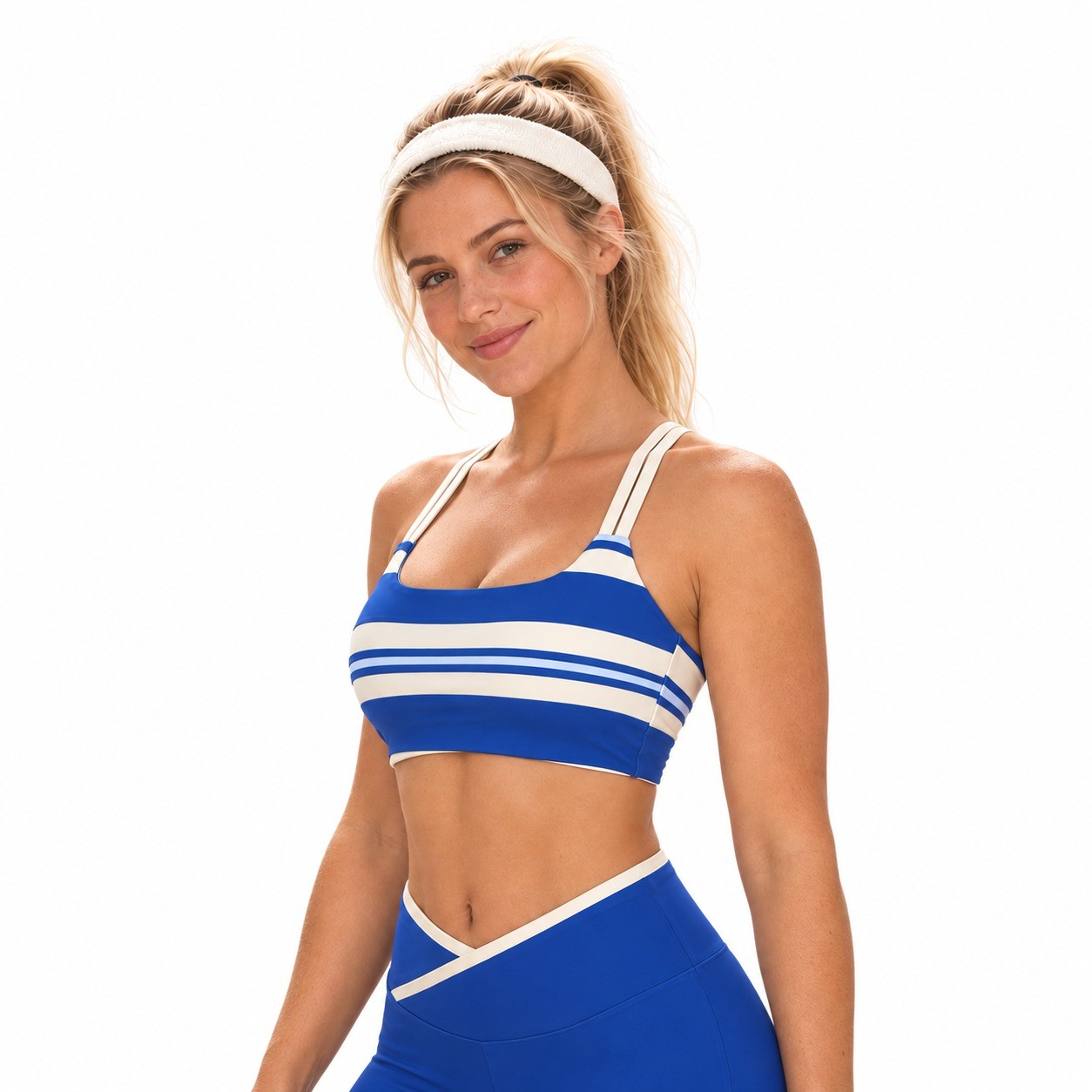
- Vintage-inspired stripes.
- Color-blocked graphic patterns.
- Retro geometric motifs.
- Repeated contrast shapes.
- Sport-inspired decorative graphics.
These designs can work particularly well for matching sets, fitted tops, and statement leggings.
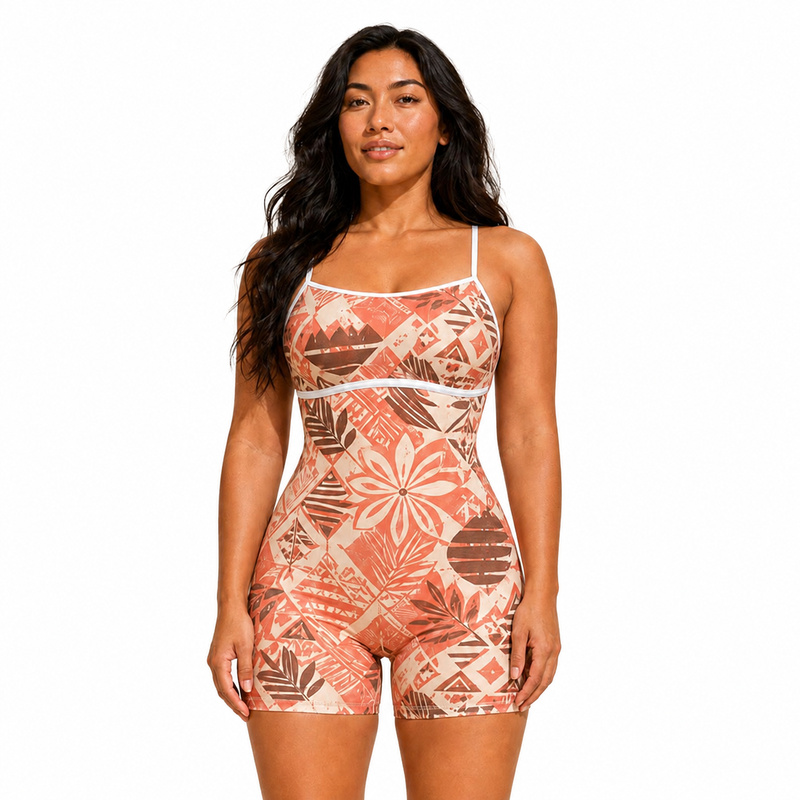
Nature-Inspired Prints
Organic patterns inspired by natural forms offer another direction for activewear collections.
Design Ideas:
- Abstract botanical motifs.
- Organic wave patterns.
- Soft leaf-inspired graphics.
- Nature-inspired tonal prints.
- Irregular flowing shapes.
For a premium look, brands can use controlled color palettes and subtle print scales rather than overly busy graphics.
Product Development Tip
When developing printed activewear, brands should evaluate pattern placement, print scale, color consistency, fabric stretch, and print durability.
A print that looks attractive on a flat fabric swatch may appear very different once the garment is stretched and shaped around the body.
The custom print leggings printing-method comparison explains process choices to discuss with your supplier. Confirm compatibility with the actual fabric, artwork and intended stretch before choosing a process.
2. Textured Fabrics: Creating Dimension Without Bold Graphics
Fabric texture is becoming an important design tool for brands that want to create visual interest while maintaining a clean, minimalist aesthetic.
Instead of relying entirely on printed patterns, brands can use fabric construction and surface finishes to make products look more distinctive.
Ribbed Fabrics
Ribbed fabrics feature raised parallel lines that create subtle texture and dimension.
Popular Applications:
- Ribbed sports bras.
- Ribbed yoga leggings.
- Wide ribbed waistbands.
- Textured tank tops.
- Coordinated ribbed matching sets.
Different rib widths can create different visual effects, from delicate fine ribs to more prominent textured surfaces.
Jacquard Fabrics
Jacquard construction allows patterns and textures to be incorporated into the fabric structure rather than simply printed onto the surface.
Design Ideas:
- Tonal geometric jacquard.
- Repeating abstract motifs.
- Subtle logo-inspired patterns.
- Textured panel combinations.
Jacquard fabrics are worth exploring for premium activewear collections that need distinctive material details.
Mesh Fabrics
Mesh panels introduce texture, visual contrast, and additional design possibilities.
Popular Applications:
- Mesh back panels.
- Side mesh inserts.
- Breathable shoulder details.
- Layered mesh tops.
- Decorative mesh sections.
Mesh should be positioned according to the garment's intended function, coverage requirements, and durability needs.
Brushed and Soft-Touch Fabrics
Brushed or specially finished fabrics create a softer surface and can give activewear a more comfortable, premium feel.
Popular Applications:
- Soft sculpt leggings.
- Pilates matching sets.
- Lightweight studio tops.
- Everyday activewear essentials.
For brands, combining different fabric textures within the same collection can create visual depth without introducing too many colors or prints.
Prints and Textures: Compare the Development Priorities
| Detail | How the appearance is created | Useful design direction | What to verify on samples |
|---|---|---|---|
| Printed pattern | Color or artwork applied through a printing process | All-over graphics, placement prints or tonal motifs | Scale, placement, color, appearance under stretch and care durability |
| Ribbed fabric | Raised ribs formed by fabric construction | Tonal sets, textured tops and waistbands | Rib definition, recovery, coverage under stretch and consistency between panels |
| Jacquard | A pattern built into knitted or woven structure | Tonal motifs and integrated geometric designs | Pattern scale, stretch direction, reverse-side comfort and repeat consistency |
| Mesh panel | An open fabric structure creates a contrasting surface | Selected back, shoulder or side inserts | Coverage, snagging, seam compatibility and comfort at panel edges |
| Brushed finish | Surface treatment creates a softer hand feel | Soft studio and everyday pieces | Surface appearance, pilling, recovery and feel after care |
These labels describe design or construction choices; they do not independently guarantee breathability, support or durability. Use the activewear fabric R&D and testing capabilities when comparing actual samples. If the range uses knitted-in textures, the seamless activewear construction guide provides further context; seamless construction and jacquard patterning describe different aspects of a garment.
3. Color Blocking & Contrast Panels: Making Basic Styles More Distinctive
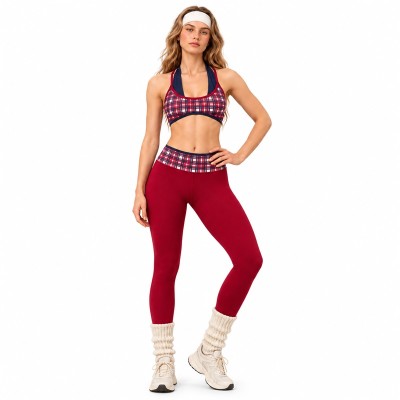
Color blocking remains a useful design approach for creating visual contrast and product differentiation.
By combining two or more colors within one garment, brands can transform basic activewear silhouettes into more distinctive designs.
For 2027 collections, color blocking can be explored through both bold contrasts and subtle tonal combinations.
Classic Color Blocking
Combining clearly contrasting colors creates a sporty and energetic appearance.
Design Ideas:
- Black and white panels.
- Navy and cream combinations.
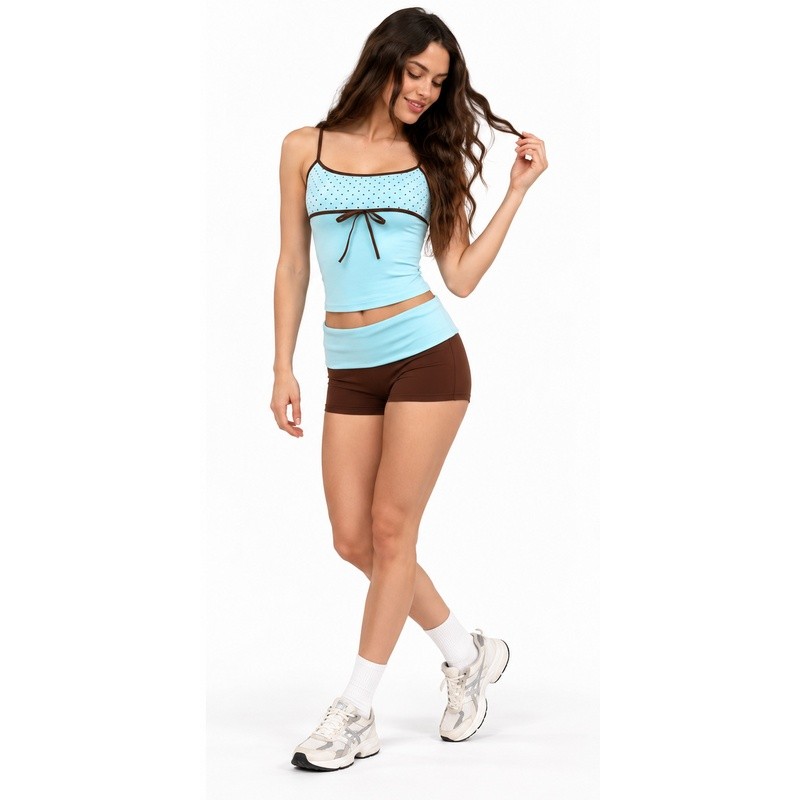
- Chocolate brown with soft beige.
- Blue and grey contrasts.
Tonal Color Blocking
Using different shades within the same color family creates a more understated and premium aesthetic.
Design Ideas:
- Light and dark brown.
- Sage and muted green.
- Dusty pink and rose.
- Charcoal and soft grey.
Strategic Panel Placement
Color-blocking panels can also follow the garment's construction.
Popular Applications:
- Side panels on leggings.
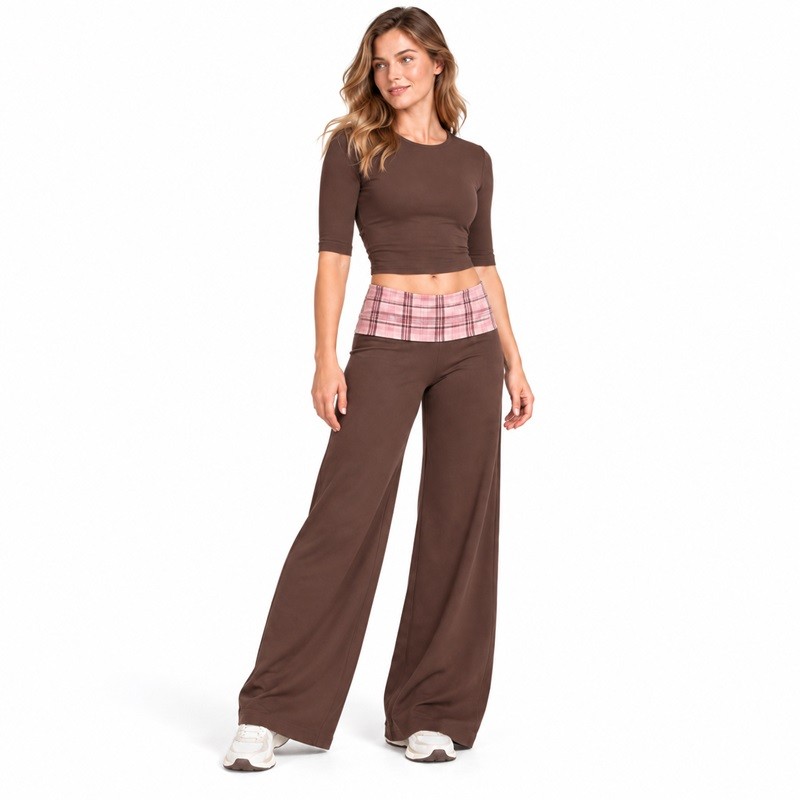
- Contrast waistbands.
- Shoulder and back panels on sports bras.
- Curved color-blocked seams.
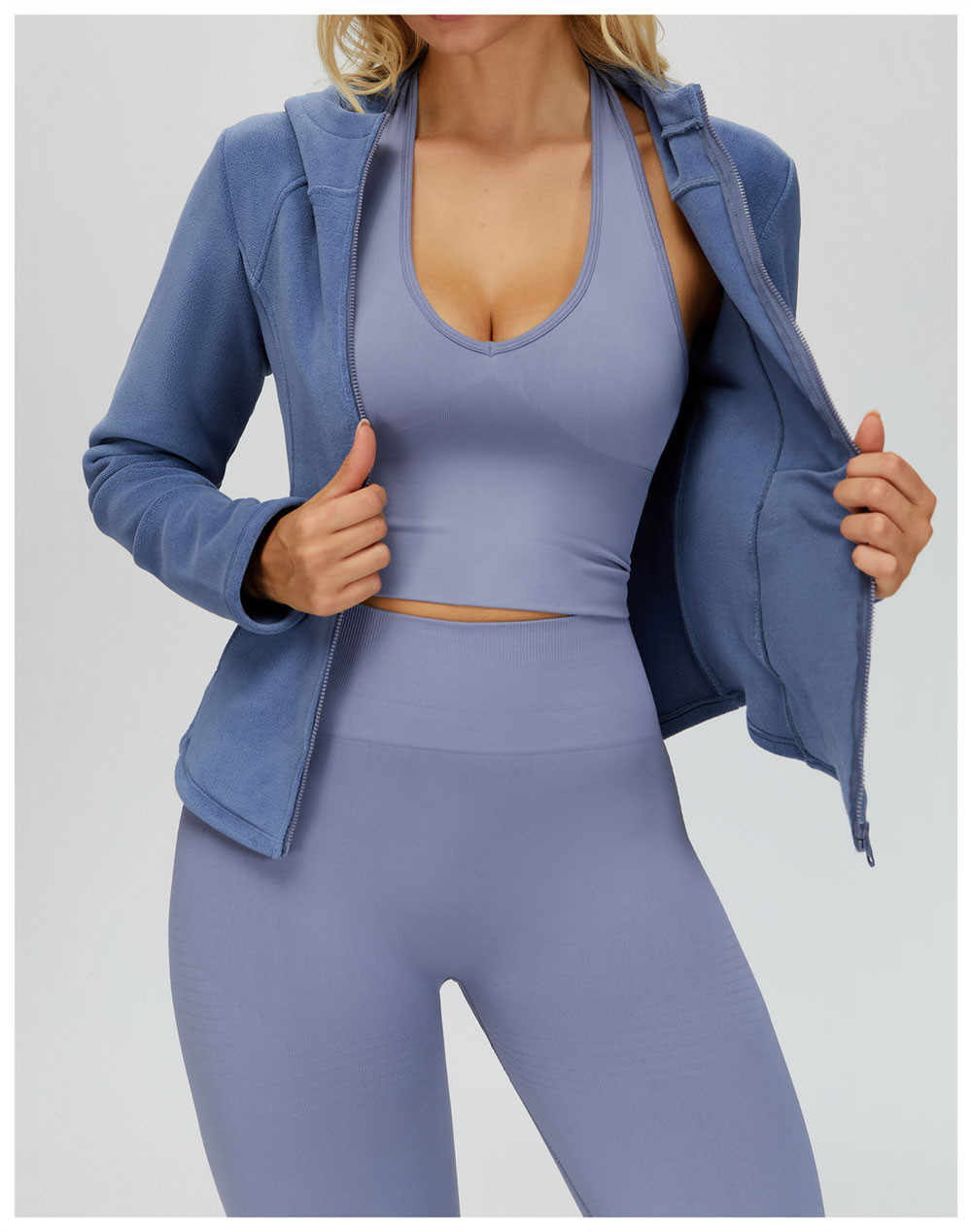
- Contrast panels on fitted jackets.
Brand Development Opportunity
A single leggings silhouette can be developed in several color combinations, helping brands create multiple product variations without completely changing the original pattern.
4. Contrast Piping & Decorative Stitching: Small Details, Strong Identity
Sometimes, the smallest details have the biggest impact on a garment's appearance.
Contrast piping and decorative stitching can add definition to simple activewear silhouettes while helping products look more carefully designed.
Contrast Piping
Piping is a narrow fabric or trim detail incorporated along garment edges or seams.
Design Applications:
- Contrast piping along leggings seams.
- Piped sports bra necklines.
- Decorative piping around armholes.
- Contrast waistline detailing.
- Piped edges on activewear jackets.
For example, cream piping on chocolate brown leggings creates a refined contrast, while tonal piping gives a more subtle finish.
Decorative Stitching
Stitching can become part of the visual design rather than serving only a construction purpose.
Design Ideas:
- Contrast topstitching.
- Curved decorative seam lines.
- Double-needle stitching details.
- Tonal stitching.
- Decorative panel outlines.
These details work particularly well on sports bras, leggings, shorts, and lightweight jackets.
Flatlock Seams
Flatlock stitching is commonly used in activewear because it can create a flatter seam construction.
Depending on the application, it can also become a visible design feature.
Best Applications:
- Performance leggings.
- Sports bras.
- Training tops.
- Stretch shorts.
When developing decorative stitching, brands should balance visual appearance with seam comfort, stretch performance, and garment durability.
5. Cutouts, Straps & Asymmetric Details: A More Fashion-Forward Look
Cutouts and asymmetric construction offer another way to make activewear more distinctive.
These design elements are especially relevant for brands developing fashion-oriented Pilates, yoga, and studio collections.
Strategic Cutouts
Cutouts introduce openings in selected garment areas to create visual interest.
Design Applications:
- Keyhole-back sports bras.
- Open-back tops.
- Side waist cutouts.
- Geometric back openings.
- Layered cutout details.
Asymmetric Necklines
Asymmetric necklines create a different visual balance compared with traditional symmetrical designs.
Design Ideas:
- One-shoulder sports bras.
- Asymmetric strap placement.
- Diagonal neckline construction.
- Uneven shoulder details.
Multi-Strap Designs
Multiple straps can create distinctive back designs while providing opportunities for customized product styling.
Popular Applications:
- Multi-strap sports bras.
- Cross-back tops.
- Open-back tanks.
- Adjustable shoulder straps.
Design Considerations
Cutouts and strap details should be evaluated for coverage, stability, comfort, and ease of movement.
The final design should maintain the garment's intended function rather than prioritizing appearance alone.
For bra styles, the custom sports bra manufacturing solution connects these design decisions with fit and construction. Assess the complete garment; a particular strap arrangement or neckline does not establish a support level.
6. Logo & Branding Details: Making Activewear Recognizable
Brand identity is an important part of product development.
For many activewear brands, the logo is not simply an identification mark. Its placement, size, material, and finishing can influence the overall appearance of a product.
For 2027 collections, brands can explore more refined and integrated logo applications.
Heat-Transfer Logos
Heat-transfer logos offer a clean, lightweight branding option.
Popular Applications:
- Small logos on leggings waistbands.
- Chest logos on sports bras.
- Logo details on sports tops.
- Minimal branding on shorts.
Embroidery
Embroidery creates a textured logo finish and can add a more premium appearance.
Popular Applications:
- Sports bra chest details.
- Jacket logos.
- Polo tops.
- Selected waistband applications.
Embroidery placement and backing should be evaluated to ensure comfort on stretch garments.
Silicone Logos
Silicone logos introduce a raised, dimensional effect.
Popular Applications:
- Leggings waistbands.
- Sports bra backs.
- Activewear jackets.
- Small branding details on shorts.
Woven Labels & Custom Trims
Woven labels and customized trims provide additional opportunities to reinforce brand identity.
Popular Applications:
- Inner waistband labels.
- Side seam labels.
- Custom garment tabs.
- Decorative brand details.
Brand Development Tip
A consistent logo system across leggings, sports bras, tops, and jackets helps create a more recognizable collection.
Brands should select logo methods according to garment fabric, intended placement, durability requirements, and overall design positioning.
Logo and Branding Methods: What Should Brands Compare?
| Branding method | Visual effect | Details to define with the supplier | Sample review priorities |
|---|---|---|---|
| Heat transfer | A clean applied graphic | Transfer system, fabric compatibility, size, placement and application process | Adhesion, edge lifting, cracking under stretch and appearance after care |
| Embroidery | A stitched, textured mark | Stitch layout, density, backing, size and placement | Puckering, skin-side comfort, local stretch and stitch durability |
| Silicone logo | A raised dimensional detail | Whether printed or transferred, thickness, flexibility and attachment process | Bonding, flexing, edge condition and comfort at the intended location |
| Woven label or tab | A separate textile branding element | Label dimensions, edge finish, attachment and skin contact | Scratchiness, seam bulk, attachment strength and legibility after care |
The custom leggings logo placement and branding guide adds placement examples for bottoms. Keep artwork dimensions and placement measurements in the brief; approve the method on the actual garment rather than a display swatch alone.
7. Functional Finishes: When Design Details Improve Performance
Not every design detail needs to be purely decorative.
Some of the most valuable product innovations combine visual appeal with practical functionality.
For 2027 activewear collections, brands can explore details that improve the everyday wearing experience.
Functional Pockets
Pockets can be integrated into leggings, shorts, tennis skirts, and jackets.
Design Considerations:
- Secure placement.
- Suitable pocket depth.
- Stretch compatibility.
- Minimal bulk.
- Comfortable access during movement.
Adjustable Features
Adjustable details provide additional flexibility for different styling preferences.
Design Ideas:
- Adjustable straps.
- Drawstring waistbands.
- Adjustable jacket hems.
- Customizable closures.
Thumbholes & Layering Details
Thumbholes on long-sleeve tops and lightweight jackets offer a practical detail for layering and cooler-weather workouts.
Double-Layer Construction
Selected areas of a garment can use double-layer construction to adjust coverage and structure. Any support benefit should be assessed in the complete garment rather than inferred from the layer count.
Popular Applications:
- Sports bra fronts.
- Leggings waistbands.
- Built-in shorts.
- Selected training tops.
For brands, functional details should be developed with the garment's intended activity, fit, and construction requirements in mind.
8. How to Apply 2027 Design Trends to Your Activewear Collection
Knowing which design details are worth exploring is only the first step. The next challenge is combining them into a cohesive collection that reflects your brand identity.
Here are four practical steps for developing your next activewear range.
Step 1: Define Your Collection's Design Direction
Start by identifying the overall aesthetic of your collection.
For example:
| Collection Direction | Design Details |
|---|---|
| Minimalist Activewear | Tonal textures, clean seams, subtle logos |
| Retro Sportswear | Vintage stripes, contrast piping, color blocking |
| Premium Studio Wear | Ribbed fabrics, jacquard textures, refined cutouts |
| Performance Activewear | Functional panels, flatlock seams, practical pockets |
| Fashion-Forward Activewear | Asymmetric details, open backs, statement prints |
Choosing one main design direction helps maintain consistency across different products.
Step 2: Combine Prints, Textures & Finishes Carefully
Not every product needs multiple decorative details.
A more balanced approach is to select one or two key design features for each garment.
For example:
- Printed leggings with a simple sports bra.
- Ribbed leggings with a clean square-neck top.
- Color-blocked sports bras with solid-color bottoms.
- Minimalist leggings with contrast piping.
- Seamless matching sets with subtle jacquard textures.
This creates product variety while keeping the collection visually coordinated.
Step 3: Select the Right Materials and Construction
Different design details require different manufacturing considerations.
For example:
- All-over prints require suitable printing methods and colorfastness testing.
- Ribbed fabrics require consistent stretch and recovery.
- Mesh panels require careful placement and finishing.
- Contrast piping requires accurate seam construction.
- Embroidery requires suitable backing and placement.
- Cutouts require appropriate reinforcement and coverage evaluation.
Discussing these requirements with your manufacturer during the development stage helps avoid unnecessary sample revisions.
Step 4: Test Design Details Before Bulk Production
Before approving a final sample, brands should evaluate:
- Print clarity and color consistency.
- Fabric texture after washing.
- Seam strength and flexibility.
- Piping and trim durability.
- Logo adhesion or embroidery quality.
- Comfort around decorative seams and cutouts.
- Consistency between sample and bulk production.
A successful design should look attractive, feel comfortable, and remain reliable after repeated use.
Design Detail Specification and Sample Approval Checklist
| Area | Record in the development brief | Sample review | Approval evidence |
|---|---|---|---|
| Artwork and pattern placement | Artwork version, repeat size, placement points, colors and grading approach | Compare flat and worn appearance across the intended sizes | Approved artwork and sample photographs |
| Color combinations | Color references for shell, panels, thread, piping and trims | Compare under agreed lighting and review relevant colorfastness checks | Approved color references and test requirements |
| Piping and decorative seams | Trim type, width, seam route, thread and stretch requirements | Check comfort, seam extension, puckering and recovery | Construction notes and agreed tolerances |
| Cutouts and straps | Opening dimensions, strap anchors, lengths and adjustment range | Check coverage, stability and ease of dressing during wear trials | Fit comments and measurements by size |
| Logos and labels | Method, artwork size, placement and application or attachment details | Check adhesion or stitching, comfort and appearance after care | Approved logo sample and inspection criteria |
| Texture and surface finish | Fabric reference, construction, finishing and intended hand feel | Compare surface, dimensions and feel after the agreed care cycles | Approved fabric reference and review results |
Agree numerical tolerances, test methods and acceptance criteria for each style instead of applying one specification to every design. The activewear product knowledge guides offer supporting reading, while the activewear customization guides help organize the wider order brief.
9. Develop Custom Activewear Designs with Bloomto
At Bloomto, we help activewear brands transform creative concepts into customized yoga, Pilates, and women's sportswear collections.
Whether you are developing a minimalist activewear line, a retro-inspired collection, or a distinctive range of printed and textured garments, our OEM, ODM, and private-label services support different stages of product development.
Our Customization Capabilities
Custom Prints & Patterns
Develop all-over prints, geometric patterns, abstract graphics, color-blocking designs, and customized color combinations.
Custom Fabrics & Textures
Explore nylon-spandex, recycled nylon, polyester-spandex, ribbed fabrics, jacquard textures, mesh materials, and other suitable options.
Custom Garment Details
Customize contrast piping, seam placement, panel construction, necklines, straps, cutouts, waistbands, and other design elements.
Custom Logo Applications
Choose from heat-transfer logos, embroidery, silicone logos, woven labels, and other branding options according to your product requirements.
Private Label & Packaging
Complete your brand identity with customized care labels, hangtags, woven labels, and packaging.
Explore the private label activewear manufacturing service for the branding components to include with your garment brief.
Why Choose Bloomto?
- Established in 2015.
- More than 3,000 brands served.
- MOQ starting from 100 pieces per style per color.
- Sample development in approximately 7–15 days.
- Bulk production in approximately 30–45 days.
- Dedicated design, pattern-making, and product development support.
From initial design inspiration to finished garments, we help brands develop activewear products that reflect their creative direction and market positioning.
Ready to Bring Your Activewear Design Ideas to Life?
Whether you are looking for custom printed leggings, ribbed sports bras, color-blocked activewear sets, or personalized garment details, Bloomto can support your next product development project.
Final Thoughts
In 2027, activewear design is about more than choosing the right silhouette or seasonal color. Prints, fabric textures, construction details, and finishing techniques all contribute to a product's identity.
From retro-inspired patterns and tonal jacquard to contrast piping, open-back details, and personalized logos, these design elements give brands more ways to create distinctive collections.
The key is to use details with purpose, balancing visual appeal, comfort, performance, and manufacturing feasibility.
With thoughtful design development and the right manufacturing partner, brands can transform everyday activewear essentials into products that reflect their unique brand identity.
Frequently Asked Questions
1. What are the main activewear design trends for 2027?
Design directions worth exploring include statement prints, textured fabrics, tonal jacquard, color blocking, contrast piping, decorative stitching, asymmetric details, and personalized logo applications.
2. What prints are suitable for activewear?
Geometric prints, abstract patterns, retro-inspired graphics, organic motifs, and customized all-over prints are worth considering. The best option depends on your brand identity, target customers, and product positioning.
3. Which textured fabrics can brands compare for activewear?
Ribbed fabrics, jacquard fabrics, mesh materials, and selected brushed stretch fabrics offer different visual and functional possibilities for activewear collections.
4. How can brands make basic leggings more distinctive?
Brands can introduce design details such as contrast piping, textured panels, color blocking, contour seams, custom prints, and subtle logo applications without changing the basic leggings silhouette.
5. What is the difference between printed and jacquard fabrics?
Printed fabrics have patterns applied to the fabric surface through a printing process. Jacquard fabrics incorporate patterns into the fabric structure through the weaving or knitting process, creating integrated textures and designs.
6. Can I customize activewear prints, fabrics, and logo details?
Yes. Bloomto supports custom prints, fabric selection, color development, garment construction, logo applications, labels, and packaging for different activewear products.
7. What is the MOQ for custom activewear at Bloomto?
Our standard MOQ starts from 100 pieces per style per color, with a 4–5 size range. Specific requirements can be discussed according to the product and customization details.
8. How long does custom activewear development and production take?
Sample development typically takes 7–15 days, while bulk production generally takes 30–45 days, depending on design complexity, materials, and order requirements.
9. Can one logo method be used on every activewear fabric?
Not automatically. Fabric surface, stretch, finishing and the intended logo location can affect application and wear. Ask the supplier to confirm compatibility, then review the logo on the actual fabric and garment for comfort, attachment and appearance after the agreed care process.
10. How can brands check whether a print works when the garment stretches?
Review the printed fabric at the expected wearing extension and on the finished sample. Check motif distortion, color appearance, coverage, seam alignment and placement across sizes. Record the approved artwork scale and placement, then check the sample again after the agreed washing and wear trials.
Planning a printed or textured activewear collection? Share your artwork, garment references, fabric preferences, logo method, size range, quantities and launch timing. Contact Bloomto about custom activewear prints, textures and finishes to discuss the development brief and sampling requirements.