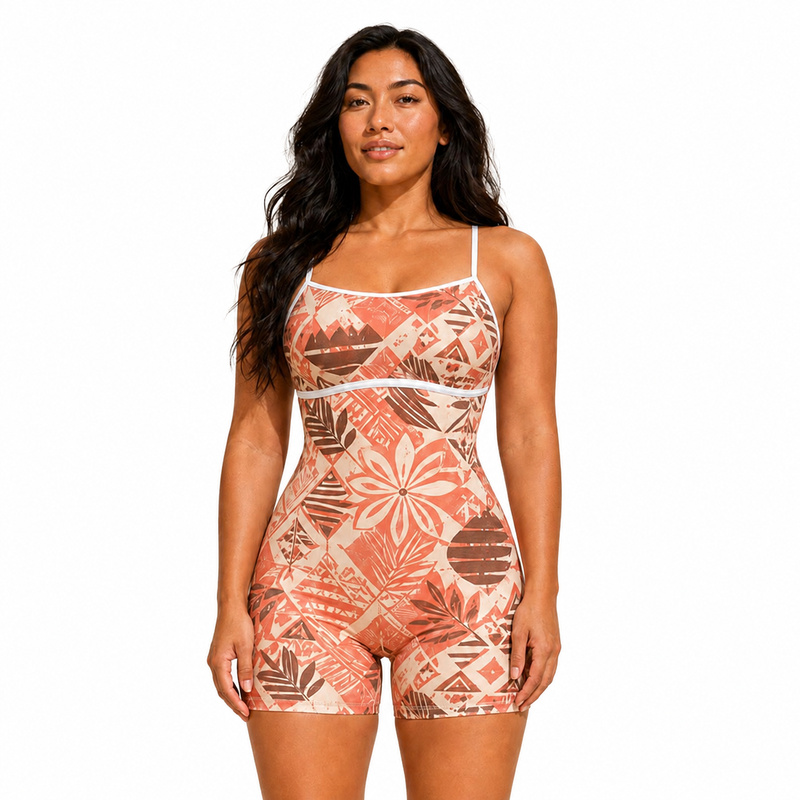
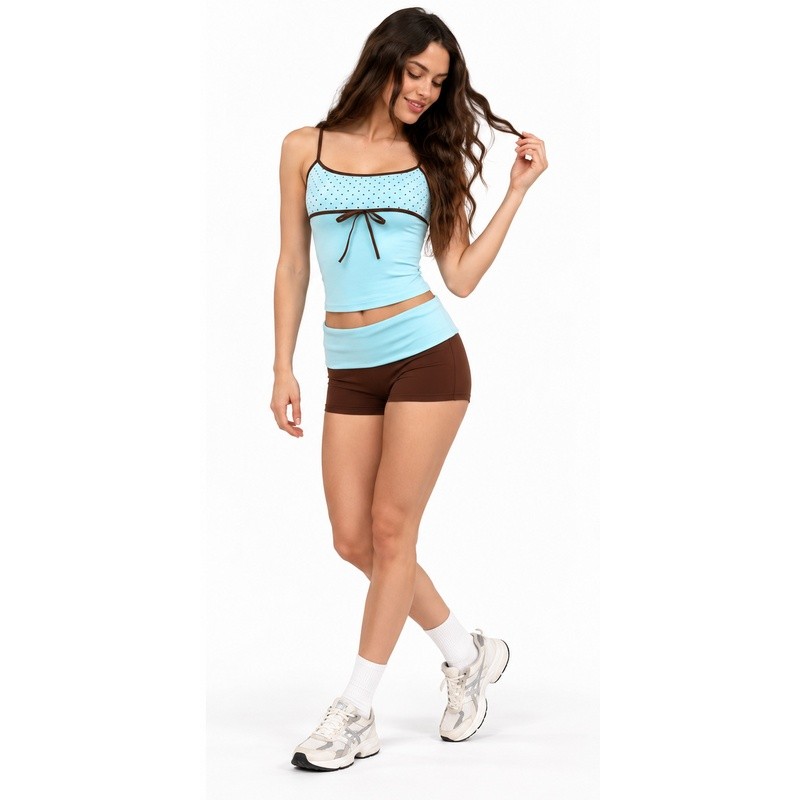
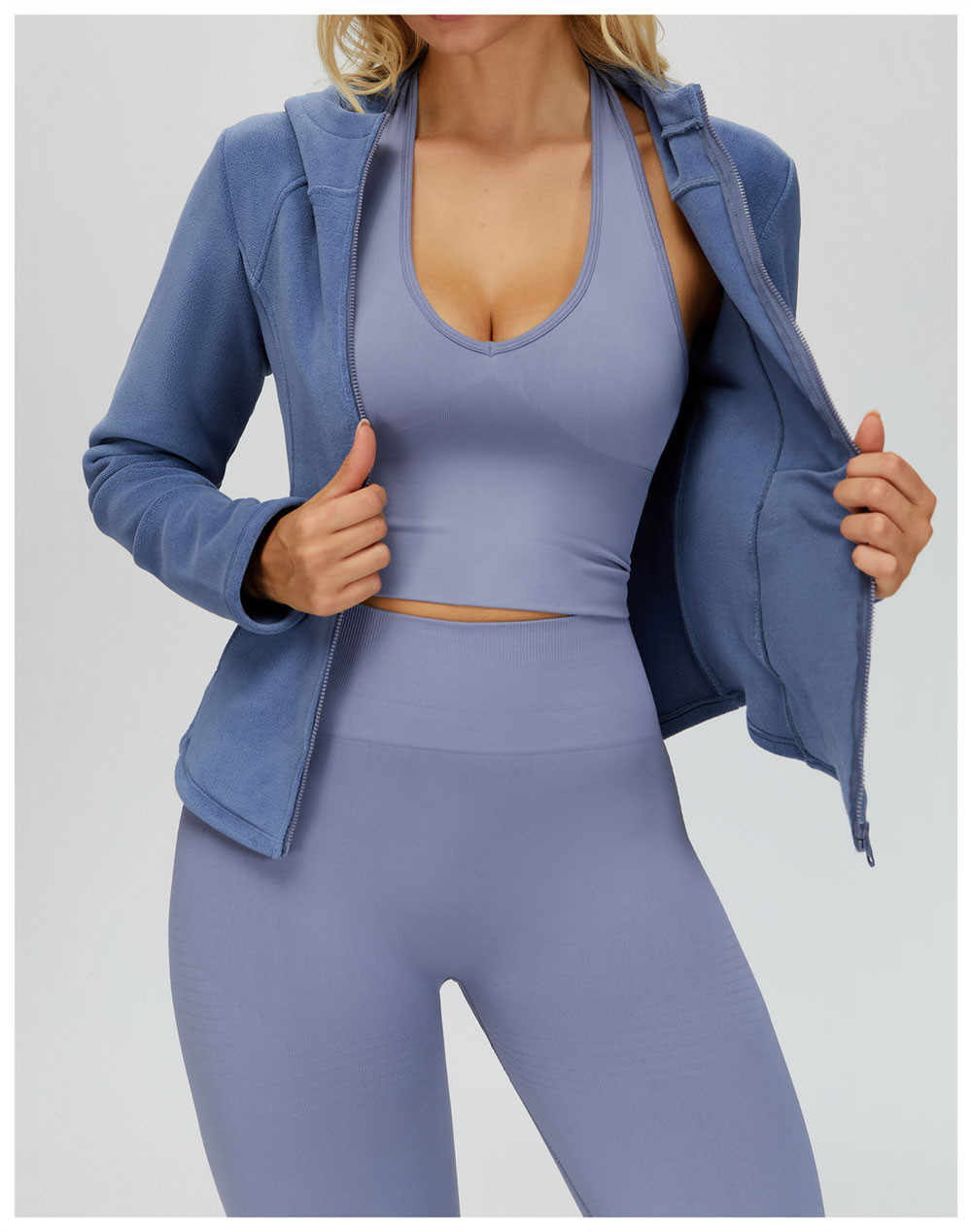
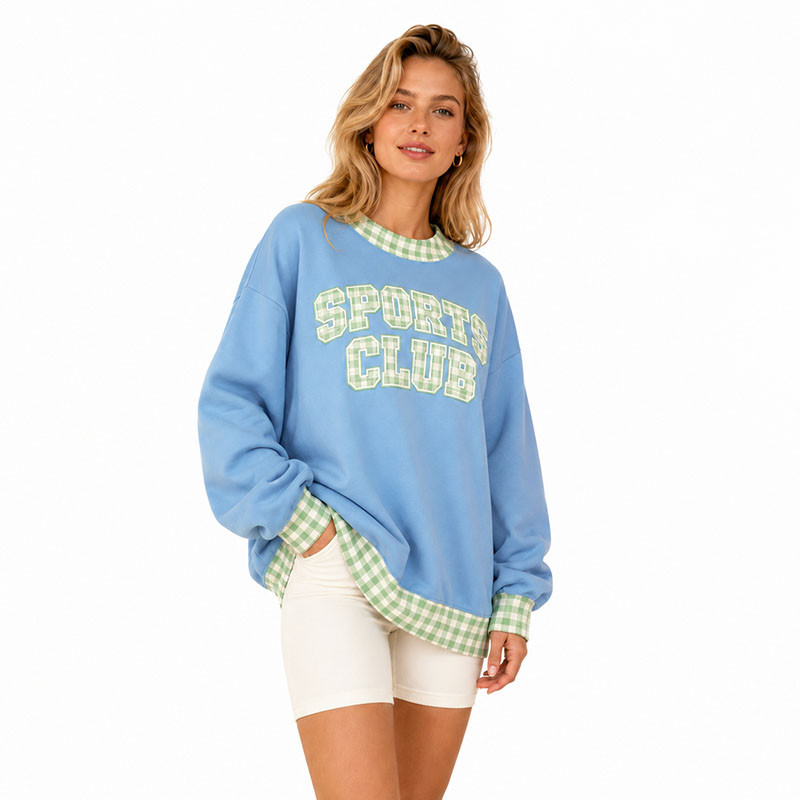
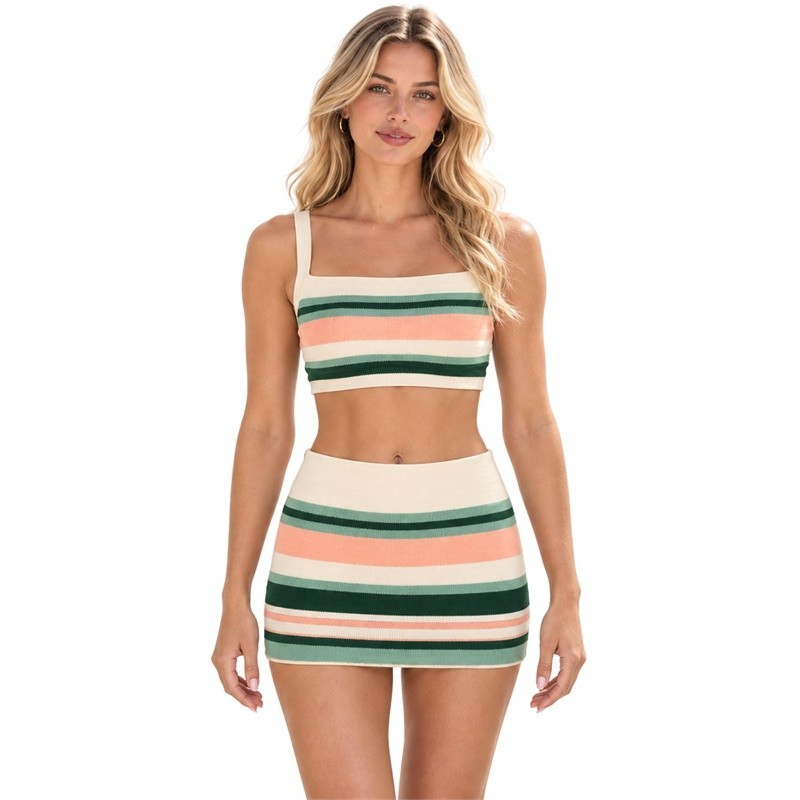
How to Develop a Cohesive Activewear Collection: Matching Sets, Colorways and Product Design
QUICK ANSWER
How do you develop a cohesive activewear collection?
Start with a core sports bra and leggings set, then extend the same fit direction, color palette and design details to shorts, tops and layers. Choose fabrics for each garment’s function, approve physical color samples together, and review complete outfits during sampling. Consistent proportions, trims, logo placement and sizing help different products feel like one collection.
Building a successful activewear brand is about more than creating individual products. Today's consumers increasingly look for coordinated workout outfits that combine comfort, performance, and a consistent visual identity.
For activewear brands, developing a cohesive collection means creating products that work together in terms of design, fabric, fit, and color. A sports bra should pair naturally with leggings, biker shorts should complement the same collection, and jackets or tops should complete the overall look.
This is why custom yoga and activewear sets and matching workout sets have become important elements of modern activewear product development.
Whether you are launching a new fitness clothing brand or expanding an established product line, a well-planned collection can strengthen brand recognition, create more product combinations, and give customers more reasons to purchase multiple items.
In this guide, we explain how to approach activewear collection development, from choosing core products and coordinating colorways to developing custom designs and working with the right manufacturing partner.
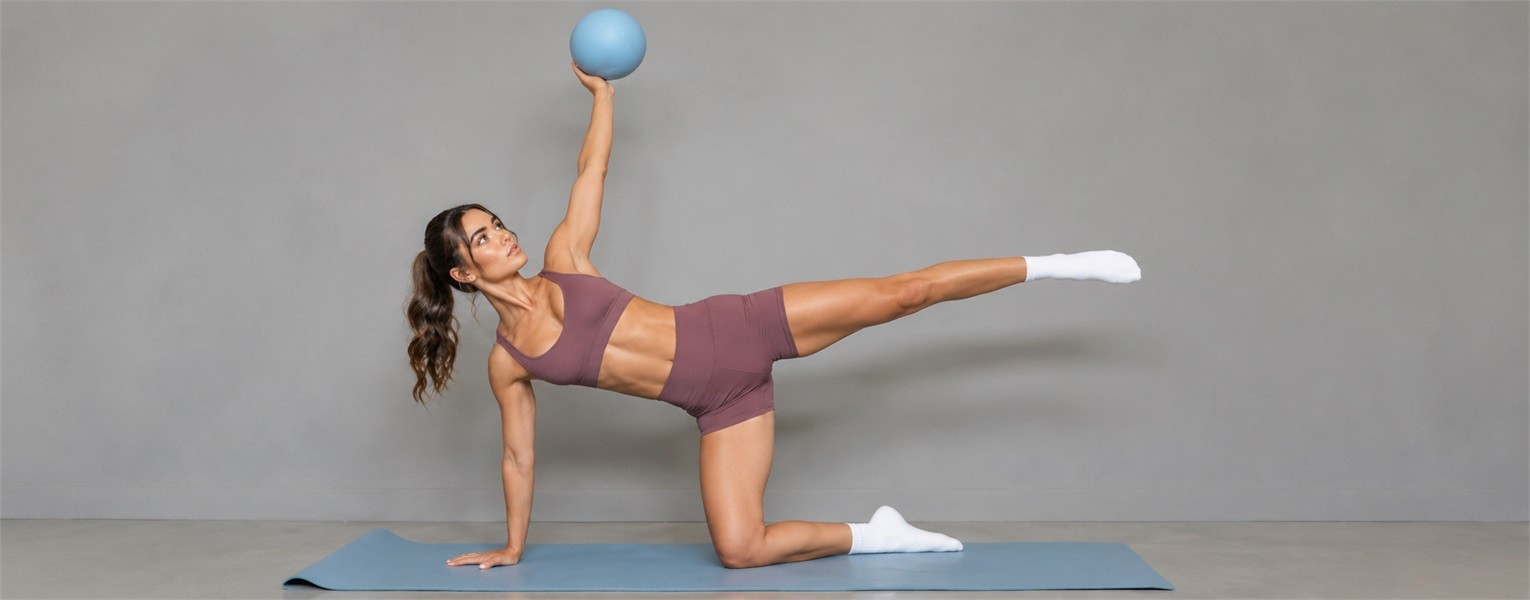
1. Start with a Core Matching Set: Sports Bra + Leggings
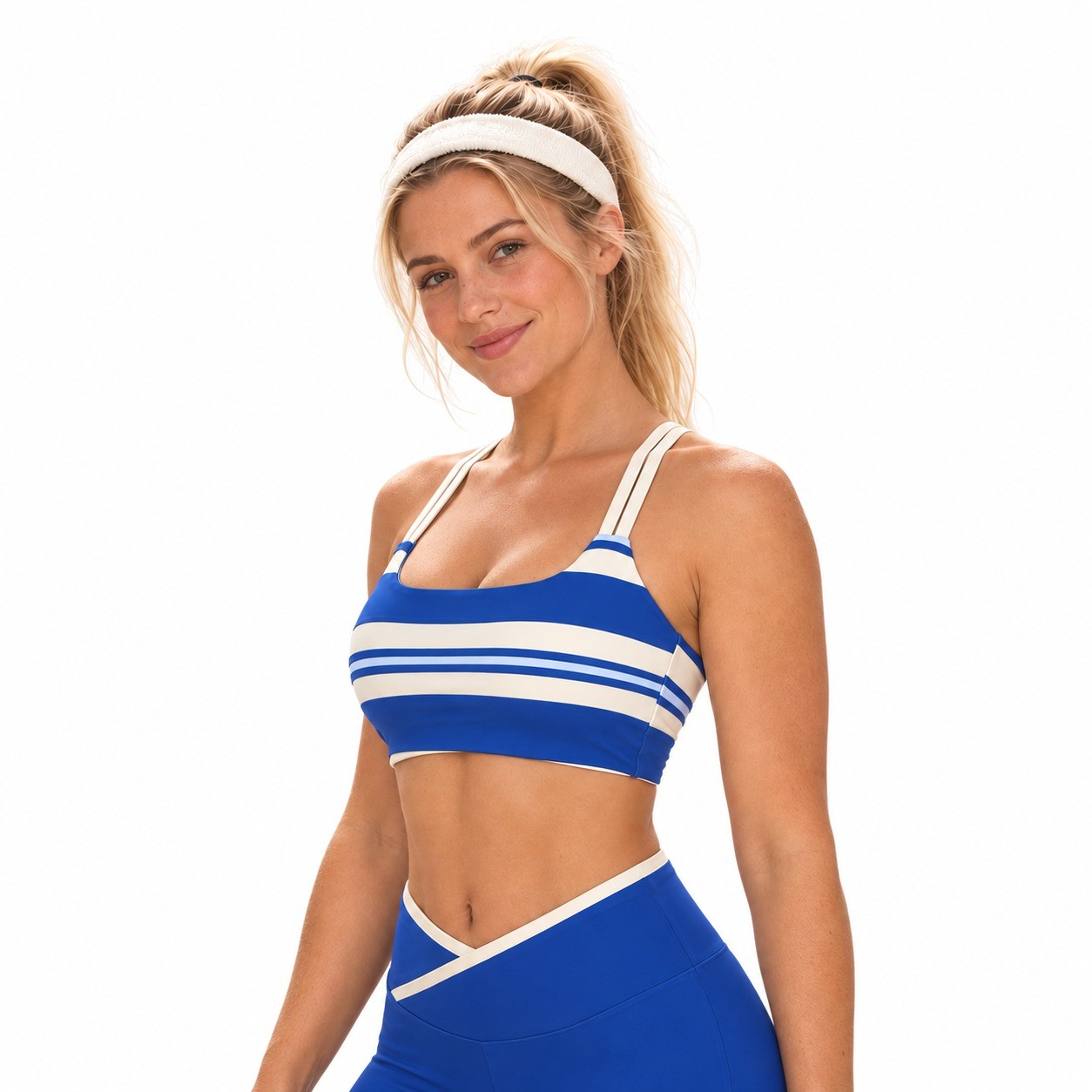
A matching sports bra and leggings set is one of the most effective starting points for an activewear collection.
These two products create a complete workout outfit while allowing brands to establish their signature fit, fabric, and design language.
Instead of developing each product independently, brands should consider how the two garments work together.
Sports Bra: Balance Support, Comfort and Design
Sports bras are both functional and visual elements of a matching workout set.
When developing a custom sports bra, consider:
- Support level: Low, medium, or high support depending on the intended activity.
- Strap design: Racerback, cross-back, adjustable straps, or wide shoulder straps.
- Neckline: Scoop neck, square neck, V-neck, or high-neck designs.
- Padding: Removable cups, fixed padding, or unpadded construction.
- Fabric performance: Stretch, breathability, moisture management, and recovery.
For example, a strength-training collection may require more supportive sports bras, while a Pilates-inspired collection may prioritize flexibility, softness, and a comfortable fit.
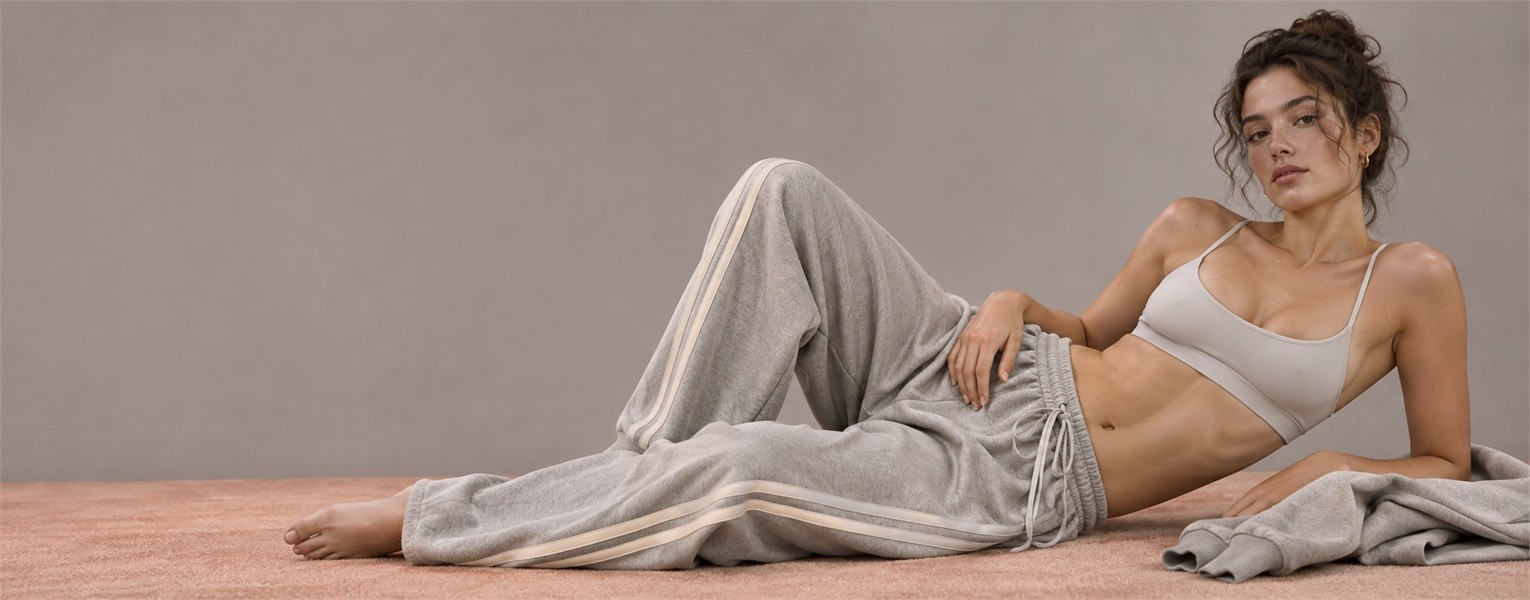
Leggings: Focus on Fit and Performance
Leggings are often the foundation of an activewear collection.
Their fit, waistband construction, and fabric performance directly influence customer satisfaction.
Important development considerations include:
- High-waisted or mid-rise construction.
- Seamless, front-seam, or traditional stitched designs.
- Compression levels appropriate for the intended activity.
- Squat-proof opacity and four-way stretch.
- Waistband stability and resistance to rolling.
- Different inseam options to accommodate customer preferences.
Manufacturing tip: When developing matching sports bras and leggings, use compatible fabrics and consistent color standards. Even when the two products use different fabric constructions, their appearance and performance should feel like part of the same collection.
For decisions specific to the two-piece outfit, see building matching sports bra and leggings sets.
2. Expand the Collection with Complementary Products
Once the core sports bra and leggings set is established, the next step is expanding the collection with complementary styles.
A cohesive collection should offer customers multiple ways to wear the same colorway and design aesthetic.
Rather than introducing unrelated products, build around the original matching set.
Biker Shorts: Create a Warm-Weather Alternative
Biker shorts are a natural extension of leggings.
Brands can reuse the same fabric, waistband construction, and design details while adjusting the inseam and fit.
This approach creates two product options within the same collection:
- Full-length leggings for training, yoga, and everyday wear.
- Biker shorts for warmer weather, cycling, and high-intensity workouts.
Using the same fabric and color palette helps maintain visual consistency while giving customers more styling choices.
Tops and Vests: Add More Styling Options
Adding workout tops and vests allows brands to expand beyond traditional matching sets.
Popular options include:
- Fitted workout tanks.
- Cropped training tops.
- Longline sports tops.
- Ribbed workout tanks.
- Sleeveless performance tops.
These products can be designed to pair with existing leggings and biker shorts, increasing the number of possible outfit combinations.
Jackets and Hoodies: Complete the Collection
Outerwear adds another dimension to an activewear collection.
Lightweight jackets, cropped zip-up jackets, training hoodies, and fitted long-sleeve tops help customers transition between workouts and everyday activities.
For brands targeting the premium athleisure market, layering pieces also create opportunities for more sophisticated product styling.
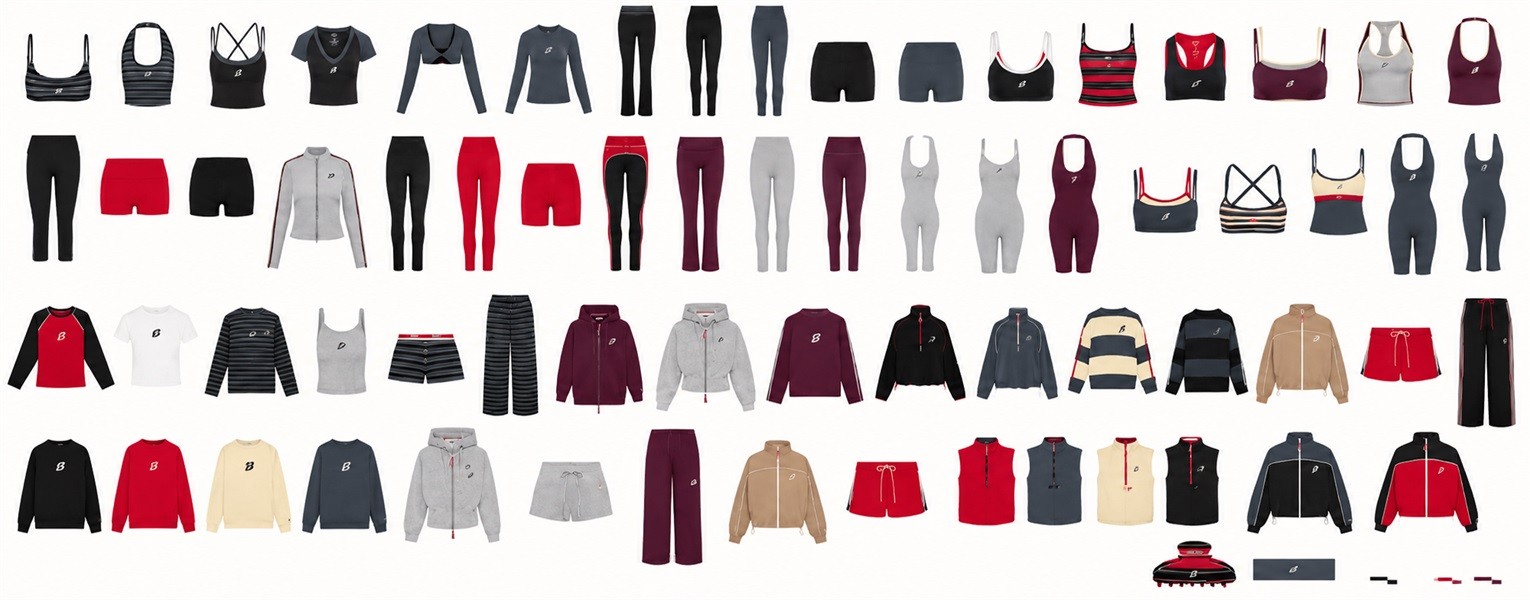
A coordinated collection might include:
Swipe across the table to compare all columns.
| Product Category | Key Styles | Collection Purpose |
|---|---|---|
| Core Sets | Custom yoga sports bras + Custom yoga leggings | Establish the signature look |
| Bottoms | Custom yoga and biker shorts + Leggings | Offer different coverage options |
| Tops | Custom yoga tops and vests | Expand outfit combinations |
| Outerwear | Custom yoga jackets + Hoodies | Complete the collection |
| Additional Styles | Jumpsuits + Matching Sets | Introduce new silhouettes |
The goal is to create a product family in which each item complements the others.
To prioritize the core silhouettes before expanding, read building a custom leggings capsule for activewear brands.
3. Develop a Consistent Colorway Strategy
Color is one of the most recognizable elements of an activewear collection.
For many DTC fitness brands, a successful colorway can become closely associated with the brand's identity.
However, developing matching colors across different garments requires more than selecting the same Pantone reference.
Different fabrics, fiber compositions, and surface finishes can affect how a color appears.
A carefully planned color strategy helps maintain consistency across the entire collection.
Build a Core Color Palette
Start with a small, recognizable palette rather than introducing too many colors at once.
A practical collection color strategy can include three categories:
1. Core Colors
These are the foundation of the collection and can remain available across multiple product drops.
Examples:
- Black
- Chocolate Brown
- Navy
- Charcoal Grey
- Soft Beige
2. Seasonal Colors
Seasonal shades help introduce freshness without changing the brand's overall identity.
Examples:
- Dusty Rose
- Sage Green
- Butter Yellow
- Burgundy
- Muted Blue
3. Accent Colors
Accent colors can be used for contrast panels, straps, piping, logos, and other design details.
Examples:
- Bright Coral
- Electric Blue
- Lime Green
- Soft Lavender
A balanced palette allows brands to create multiple collections while maintaining a recognizable visual direction.
Match Colors Across Different Fabrics
One of the biggest challenges in developing matching workout sets is achieving consistent colors across different fabric types.
For example, a sports bra may use a nylon-spandex fabric, while a jacket may require a different fabric construction.
Even when the same color reference is used, the finished products may look slightly different.
To improve color consistency, manufacturers should:
- Confirm the fabric composition and construction for each product.
- Use Pantone references to establish the target color.
- Develop lab dips or fabric color samples.
- Compare samples under consistent lighting conditions.
- Approve color standards before bulk production.
- Monitor dye lot consistency during manufacturing.
Important: A Pantone reference is a starting point, not a guarantee that different fabrics will produce identical visual results. Physical color approval is essential for a coordinated collection.
What should you approve before bulk production?
A collection brief should connect the look of the outfit with the specifications for every garment. Use this checklist to record the decisions that must stay consistent across styles.
Swipe across the table to compare all columns.
| Specification | What to record | Approval check |
|---|---|---|
| Style and color matrix | List each style code, garment category, colorway and planned pairing. | Confirm that every advertised set can be assembled from the planned products and sizes. |
| Fabric specification | Record fiber composition, knit or finish, weight, stretch and recovery requirements for each style. | Approve the actual fabrics together; define product-specific performance targets with the supplier. |
| Physical color standards | Identify the approved lab dip or swatch for each fabric and trim, with date and version. | Compare bra, leggings, layers, thread and trims side by side under agreed lighting conditions. |
| Design and trim details | Record panel lines, logo position, stitching, elastic, zipper and trim colors. | Review a complete outfit against the same design reference, including contrast details. |
| Fit and size consistency | Define each style’s measurements, tolerances and grading rules for the shared size range. | Try coordinated pieces together; verify the intended proportions and coverage across sizes. |
| Production approval | Keep the approved sample, color standards and final tech pack together as the production reference. | Approve the collection before bulk production and record any proposed material or construction changes. |
| Order quantities and timing | Confirm MOQ by quoted style and color, size split, fabric minimums and delivery dependencies. | Confirm whether tops and bottoms are separate order lines and whether they can ship together. |
Agree on color tolerances, measurement tolerances and performance tests for the actual fabrics and garments. A shared color name or Pantone reference alone does not replace physical approval.
Material selection and color development should be reviewed together. Explore sportswear fabric R&D capabilities when comparing fabric options for a coordinated collection.
4. Create Contrast and Color-Block Designs
While monochromatic matching sets offer a clean and minimal aesthetic, contrast designs can help a collection stand out.
Color-blocking and panel construction give brands more opportunities to create recognizable product details.
Here are several approaches to consider.
Contrast Waistbands
A contrasting waistband can add visual definition to otherwise simple leggings.
For example:
- Black leggings with a contrasting grey waistband.
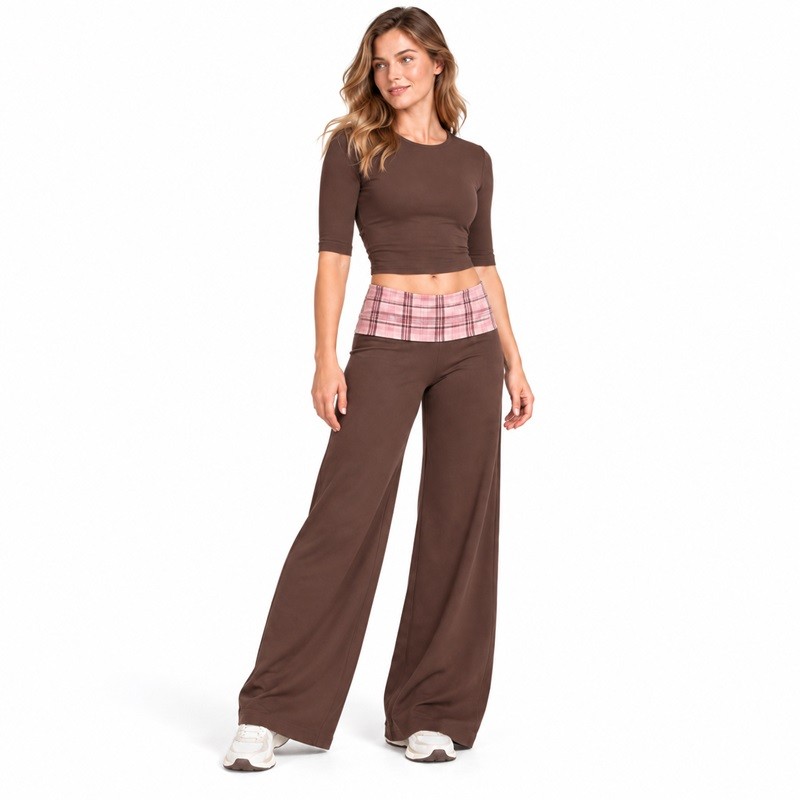
- Chocolate brown leggings with a beige waistband.
- Navy leggings with a lighter blue waistband.
Color-Block Panels
Different fabric panels can create a more dynamic appearance.
Popular placements include:
- Side panels on leggings.
- Contrasting bra straps.
- Waistband inserts.
- Shaped panels around the hips.
- Contrasting shoulder and back panels.
Contrast Stitching and Trims
Small design details can also help differentiate products.
Consider:
- Contrast flatlock stitching.
- Decorative seam lines.
- Piping details.
- Custom zipper colors.
- Branded elastic bands.
When developing these designs, it is important to maintain a consistent design language across the entire product range.
For example, if a collection uses contrast side panels on leggings, the sports bra or jacket could incorporate similar panel lines or color details.
This creates a stronger connection between individual products.
When the same panel, piping or contrast detail needs to carry across a bra and bottom, review custom yoga set design and manufacturing solutions and specify how the detail should align across both garments.
5. Establish a Consistent Fabric and Design Language
A collection may contain different silhouettes, but the products should still feel connected.
Fabric selection is one of the most important factors in achieving this.
Different fabrics can be selected for different performance requirements, but their hand feel, appearance, and overall quality should complement one another.
Common fabric options for activewear collections include:
Swipe across the table to compare all columns.
| Fabric Type | Main Characteristics | Suitable Products |
|---|---|---|
| Nylon-Spandex | Soft hand feel, stretch, smooth appearance | Leggings, Sports Bras |
| Polyester-Spandex | Durable, moisture-management potential, versatile | Training Tops, Shorts |
| Ribbed Fabric | Textured surface, distinctive appearance | Sports Bras, Leggings, Tanks |
| Brushed Fabric | Soft, comfortable surface | Leggings, Yoga Sets |
| Lightweight Stretch Fabric | Flexible and suitable for layering | Jackets, Training Tops |
Beyond fabric selection, brands should establish consistent details across products:
- Similar waistband proportions.
- Coordinated seam construction.
- Consistent logo placement.
- Matching trims and accessories.
- Consistent stitching quality.
- Unified fit and sizing standards.
These details help transform individual garments into a recognizable product collection.
6. Develop a Collection That Supports Multiple Customer Needs
A successful activewear collection should not only look coordinated. It should also serve different activities and customer preferences.
For example, a collection designed around studio fitness and strength training might include:
For Strength Training
- Medium- and high-support sports bras.
- Compression leggings.
- Supportive biker shorts.
- Performance training tops.
For Yoga and Pilates
- Soft-stretch leggings.
- Low- to medium-support sports bras.
- Flexible fitted tanks.
- Comfortable matching sets.
For Everyday Athleisure
- Cropped jackets.
- Zip-up hoodies.
- Matching leggings and tops.
- Versatile layering pieces.
This approach allows brands to develop a broader product offering without losing the consistency of their original collection.
It also creates opportunities to sell individual products and complete matching workout sets.
For a lifting-focused range, use the strength training activewear development guide to define waistband stability, opacity and movement-specific fit checks.
7. Work with an Activewear Manufacturer That Supports Collection Development
Turning a collection concept into finished products requires more than finding a factory that can manufacture individual garments.
Brands need a manufacturing partner that understands how different products, fabrics, colors, and construction details work together.
An experienced custom activewear manufacturer can support the development process from initial design to bulk production.
Key capabilities to look for include:
Multi-Category Manufacturing
Your manufacturer should be able to develop different product categories, including:
- Custom Sports Bras.
- Custom Yoga Leggings.
- Custom Biker Shorts.
- Custom Workout Tops.
- Custom Yoga Jackets.
- Custom Activewear Sets.
Working with one manufacturing partner can make it easier to coordinate fabrics, colors, sizing, and production standards across multiple styles.
Fabric Sourcing and Customization
A professional manufacturer should help brands select suitable fabrics based on product function, target price point, and design requirements.
This includes evaluating stretch, recovery, weight, opacity, softness, and durability.
Pattern Development and Sampling
Before bulk production, samples should be developed and evaluated for fit, construction, and appearance.
For a matching collection, it is particularly important to review related products together rather than approving each garment in isolation.
Quality Control Across the Collection
Quality control should cover more than individual garment workmanship.
It should also include:
- Color consistency between matching products.
- Measurement consistency across sizes.
- Fabric performance.
- Seam strength and construction.
- Logo and trim placement.
- Overall appearance of the finished collection.
These steps help ensure that products maintain a consistent standard when customers purchase multiple items from the same collection.
If the collection still needs design and pattern development, review ODM activewear manufacturing. If your designs and specifications are ready, the OEM activewear manufacturing workflow explains how to move from tech pack to production.
8. How Bloomto Supports Custom Activewear Collection Development
At Bloomto, we understand that activewear brands need more than individual garment manufacturing. They need a reliable partner who can help turn a product concept into a coordinated collection.
As a custom activewear manufacturer, Bloomto supports OEM, ODM, and private label development for women's activewear brands.
Our product capabilities include:
- Custom Sports Bras.
- Custom Yoga Leggings.
- Custom Biker Shorts.
- Custom Workout Tops and Vests.
- Custom Yoga Sets.
- Custom Yoga Jackets and Hoodies.
- Custom Jumpsuits.
From fabric selection and color development to pattern making, sampling, and bulk production, we help brands develop products that work together as a unified collection.
Flexible Customization for Growing Brands
Our standard starting MOQ is 100 pieces per style per color, distributed across 4–5 sizes.
This gives emerging and growing activewear brands an opportunity to develop coordinated product collections without starting with excessively large quantities.
Product Development and Manufacturing Support
Our typical development and production timelines are:
- Sample Development: 7–15 days.
- Bulk Production: 30–45 days after sample approval.
Actual timelines depend on fabric availability, design complexity, trims, and order requirements.
With our in-house development team and integrated manufacturing capabilities, Bloomto supports brands throughout the product development process.
Whether you are developing your first matching workout set or expanding an existing activewear collection, we can help bring your ideas into production.
Use the custom yoga sets collection to compare coordinated silhouettes, then define the fabrics, colors and fit requirements for your own product range.
Build Your Next Activewear Collection with Bloomto
A cohesive activewear collection starts with a clear product strategy, a consistent color palette, and designs that work together.
From matching sports bras and leggings to biker shorts, workout tops, and jackets, every product should contribute to a recognizable brand identity.
Looking for a reliable manufacturing partner to develop your next collection?
Bloomto helps activewear brands turn product ideas into coordinated, market-ready collections through custom design, flexible manufacturing, and OEM/ODM solutions.
Start Your Custom Activewear Collection with Bloomto.
Frequently Asked Questions About Activewear Collection Development
1. How do you start developing a custom activewear collection?
Start by defining your target customers, intended activities, product categories, and brand aesthetic. Develop a core matching set, usually a sports bra and leggings, before expanding into biker shorts, tops, and jackets.
2. What products should be included in a matching activewear collection?
A basic collection can include sports bras, leggings, and biker shorts. More developed collections can add workout tops, tanks, jackets, hoodies, and jumpsuits to create additional outfit combinations.
3. How do you ensure matching sports bras and leggings have the same color?
Use a consistent Pantone color reference, develop physical fabric samples, and approve lab dips before bulk production. Different fabric compositions and finishes may affect the final appearance, so physical color evaluation is important.
4. Can different activewear products use the same fabric?
Yes. Sports bras, leggings, and biker shorts can often share the same fabric if its stretch, recovery, weight, and performance are suitable for each product. Other categories, such as jackets, may require different fabric constructions.
5. What is the difference between a matching workout set and a complete activewear collection?
A matching workout set typically consists of two or more coordinated garments, such as a sports bra and leggings. A complete activewear collection includes multiple complementary product categories, colorways, and design variations built around a consistent brand identity.
6. What is the MOQ for custom activewear sets at Bloomto?
Bloomto's standard starting MOQ is 100 pieces per style per color, distributed across 4–5 sizes. Specific requirements may vary depending on fabric, construction, and customization.
7. How long does it take to develop a custom activewear collection?
Sample development typically takes 7–15 days, while bulk production generally takes 30–45 days after sample approval. Developing multiple styles may require additional coordination depending on the collection's complexity.
8. Can one manufacturer produce sports bras, leggings, biker shorts, and jackets?
Yes. A multi-category activewear manufacturer can support the development and production of different garment types within one collection. This can simplify coordination of fabrics, colors, sizing, and quality standards.
9. Why can matching activewear look different under another light?
Two fabrics can appear to match under one light source and differ under another, an effect called metamerism. Review the complete outfit under agreed lighting conditions relevant to how it will be sold and worn. Keep approved physical samples so the team compares production with the same reference.
10. How many colorways should a new activewear collection launch with?
Start with the number you can support across the planned styles, sizes and order minimums. A small core palette plus a limited seasonal option can simplify coordination. Build a style-by-color matrix before ordering so you can see whether each color creates a complete outfit and fits the budget.
11. Does the MOQ apply to a complete matching set or each garment?
Confirm this in the quotation. The starting MOQ described here is per style per color; a sports bra and leggings may be treated as separate styles. Ask the manufacturer to list each garment, color, size split and any fabric minimums so an order for matching sets is not confused with an order for individual pieces.
Ready to plan a coordinated activewear range? Send your style list, color palette, fabric preferences, size range and target quantities. Contact Bloomto about custom activewear collection development to discuss sampling, color approval and manufacturing requirements.