
Custom Sports Bra and Leggings: Building Matching Activewear Sets
A matching activewear set must work as two individual products and as one coordinated look. The sports bra needs the right support, coverage and strap construction. The leggings need reliable fit, opacity and movement performance. When customers wear them together, the fabric, color, seams, trims and branding must also feel intentional.
This guide explains how brands can develop custom sports bra and leggings sets from concept to bulk production. It covers product roles, material coordination, design language, sizing, samples, MOQ and dye-lot control, while showing how Bloomto supports a complete set-development program.
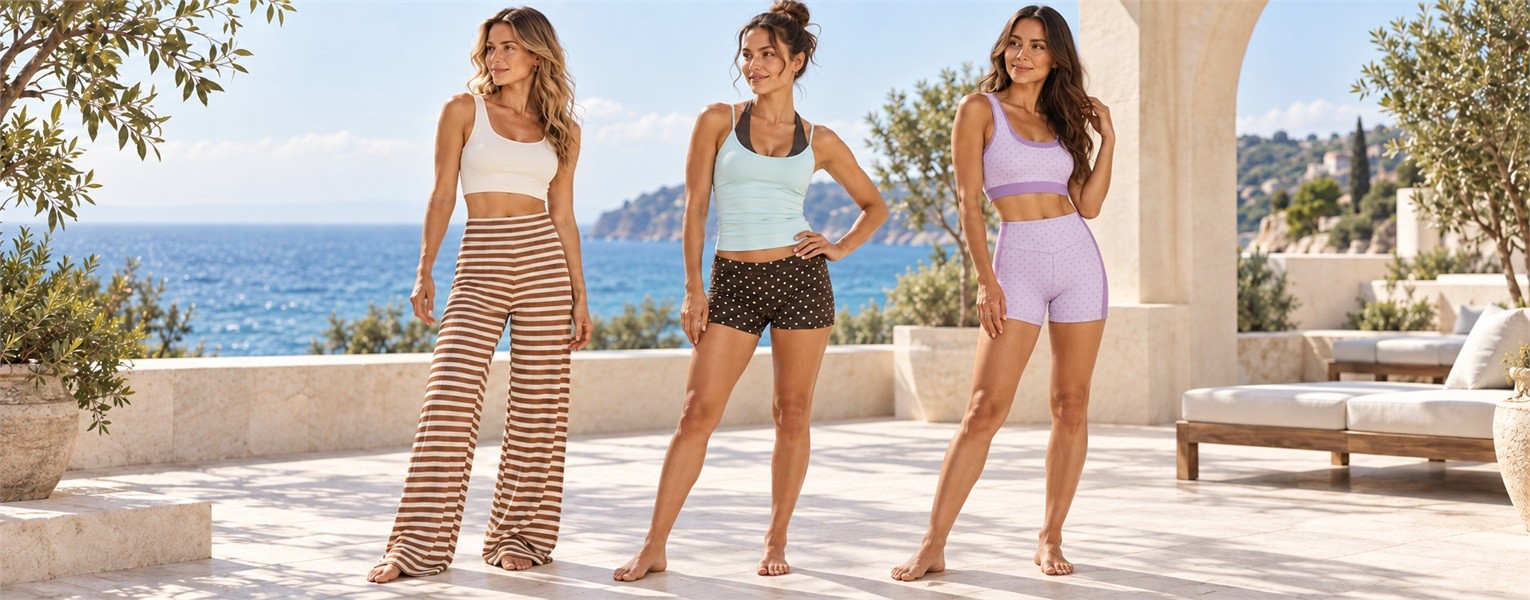
Quick Answer: How Do You Create a Matching Sports Bra and Leggings Set?
Define the customer, activity and support level first. Give the bra and leggings separate technical specifications, then connect them through a shared fabric family, color standard, seam language, trims and logo system. Fit-test both pieces independently and together. Approve color and workmanship against the same standards before bulk production.
A successful set should let customers buy the full look or either piece separately. Coordination creates the visual value, but product performance is what supports repeat purchases.
Why Sets Outperform Singles in Activewear E-Commerce
Matching sets make online merchandising easier. A complete outfit communicates the brand aesthetic immediately, gives creators a ready-to-style look and helps customers imagine how the product will be worn. When the bra and leggings are sold separately as well as together, the brand can increase choice without developing unrelated products.
Sets can also increase average order value. A customer attracted by one piece may add its matching partner, especially when product pages, photography and color names are coordinated. The set can become a campaign story, while each item still supports individual search and repeat orders.
Repeated colors, seams and brand details make the collection recognizable across product pages and social content.
Customers receive a ready-made combination without guessing whether two shades or materials will match.
Brands can merchandise a complete set while allowing customers to select different sizes for the top and bottom.
A validated set can lead into shorts, tops, jackets or additional colorways using the same design language.
Commercial value depends on execution. If the colors are visibly different, the fabrics age differently or one piece performs poorly, the matching promise becomes a source of dissatisfaction. Product coordination therefore begins in development, not in photography.
Fabric Matching: Bra and Leggings From the Same Family
Using the same fabric for both pieces can create a precise visual match and simplify sourcing. However, the bra and leggings do different jobs. A bra may need lining, stabilizing layers, elastic and support zones. Leggings need stretch recovery, opacity, waistband stability and resistance to abrasion. The main fabric can be shared only when it satisfies both specifications.
Evaluate composition, weight, four-way stretch, recovery, compression, hand feel, moisture management, pilling, shrinkage and colorfastness. For light colors, test opacity on the body and under stretch. For the bra, assess coverage, lining compatibility and how the fabric behaves around elastic, straps and cup construction.
Fabric Coordination Checklist
- Does the surface texture look consistent on the top and bottom?
- Will different lining or elastic layers change the visible color?
- Do both pieces recover after repeated stretching and washing?
- Is the legging fabric opaque during movement?
- Does the bra construction provide the intended support level?
- Can the material and color be repeated for later reorders?
If one fabric cannot meet both needs, use related materials and approve them as a coordinated pair. Matching does not always mean identical. It can mean controlled agreement in color, finish, texture and performance.
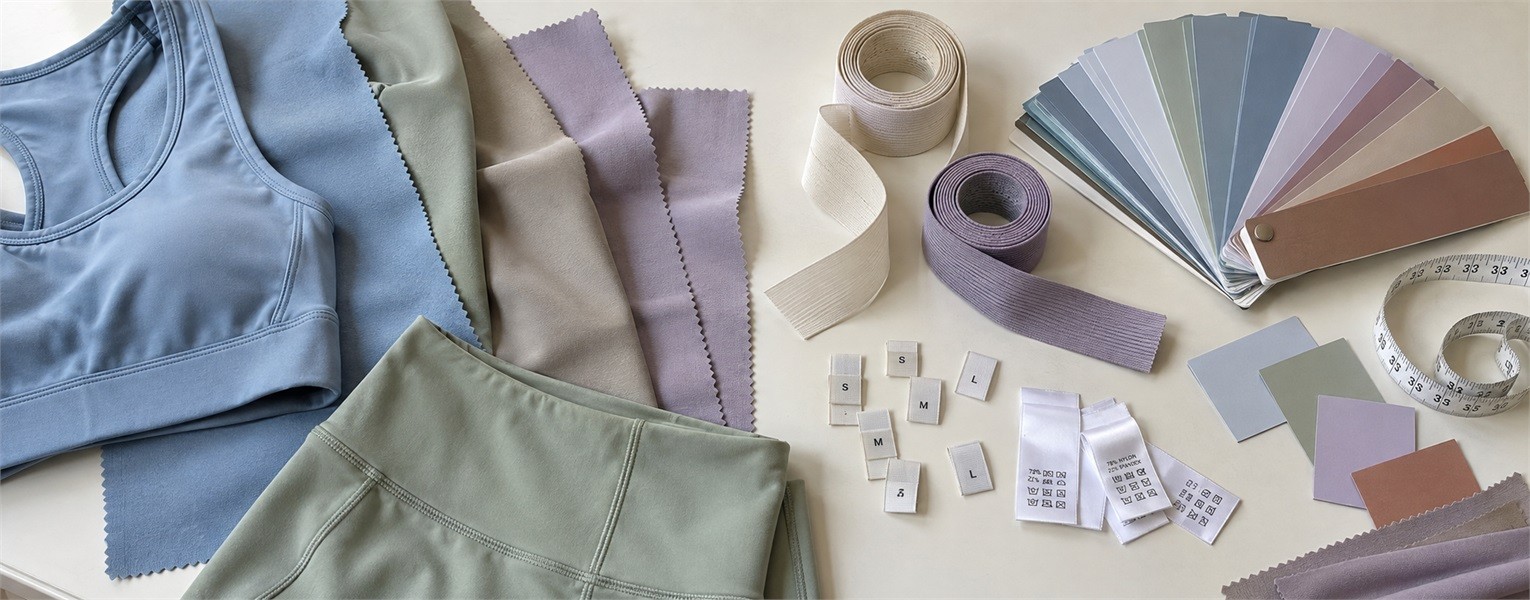
Design Language: Color-Block, Prints and Trims Across the Set
The set should share a recognizable visual system. That may include curved seam lines, contrast binding, color-block panels, printed artwork, rib textures, mesh zones, hardware or repeated logo placement. Copying every detail from the bra onto the leggings can feel forced, so decide which elements will repeat and which will adapt to the product.
For example, a curved under-bust seam can inspire a related waistband shape without being identical. A contrast strap color can return as a waistband edge or small side panel. A logo can appear in different positions while using the same technique, color and scale logic.
| Design element | Sports bra application | Leggings application |
|---|---|---|
| Color blocking | Neckline, under-bust band, straps or side panels | Waistband, hip, side leg or lower-leg panels |
| Focused placement or all-over artwork | Panel placement or full-leg repeat | |
| Logo | Front chest, back band or strap area | Waistband, hip, calf or back leg |
| Trim | Elastic, binding, sliders and hardware | Drawcord, pocket finish, label and waistband detail |
Prepare artwork at production scale and mark placement from stable construction points. Include print technique, logo color, dimensions and tolerance in the technical files. Bloomto can help review manufacturability through our custom sports bra manufacturer service and our custom leggings manufacturer for set programs.
Sizing Across the Set: Bra Grading vs Leggings Grading
One shared size label does not mean the bra and leggings should use the same grading logic. Leggings are generally developed around waist, hip, rise, thigh, inseam and leg opening measurements. Sports bras must account for under-bust, bust volume, coverage, neckline, armhole, strap length and support construction.
Customers may need a different size on top and bottom. Selling pieces separately allows a better fit and reduces the pressure to force one combined size. The website should explain measurements, garment fit and support level clearly, and it should let customers build their own set.
Define the target body range
Use customer data to establish body measurements, size coverage and the intended fit for each product.
Fit the bra independently
Review coverage, band security, strap pressure, support, movement and comfort across relevant sizes.
Fit the leggings independently
Check waist stability, rise, crotch shape, opacity, compression, length and recovery during movement.
Review the complete look
Confirm proportion, waistband-to-bra spacing, seam alignment, color and comfort when both pieces are worn together.
Custom Sports Leggings That Complete the Set
Custom sports leggings should support the same use case as the bra. A high-support training bra paired with a very light lounge legging creates a visual set but an unclear performance story. Align the intended activity, support, climate and price position before selecting features.
Waistband design has a strong effect on the combined silhouette. Its height and shape should work with the bra length without creating an unintended gap or overlap. Side seams, pockets and contour panels should relate to the top without adding unnecessary complexity.
Use functional details selectively. Pockets can improve utility, but they affect paneling, seam placement and cost. Bonded or laser-cut details can create a clean appearance but require suitable materials and processes. A simple product that fits well can be more commercially effective than a heavily detailed design without a clear benefit.
Brands can review supporting silhouettes in Bloomto's yoga leggings range to pair with bras and broader custom women's activewear range.
Developing a Matching Activewear Set?
Send Bloomto your sketches, reference images or tech packs, target customer, activity, support level, fabric direction, quantities, sizes, branding and launch date. We can review the set as one coordinated development program.
Build Your Set Collection With BloomtoWorking With a Custom Sports Bra and Leggings Manufacturer
A manufacturer developing both products can coordinate fabric sourcing, colors, sample timing, branding and bulk schedules. This does not remove the need for separate specifications. It gives the project one production structure while preserving the technical requirements of each item.
Bloomto supports OEM, ODM and private-label activewear development. Depending on the project, our team can review the range plan, recommend materials, develop patterns and samples, coordinate logos and labels, prepare production details and manage quality checkpoints. Written approvals help move confirmed information from sampling into bulk production.
Customer, product references, technical files, price target, quantity and schedule.
Main fabric, lining, elastic, trims, color standards and performance expectations.
Patterns, prototypes, fit reviews, revisions, logos, labels and packaging.
Both products reviewed separately and together against the confirmed standards.
Material controls, cutting, sewing, branding, inspection, finishing and packing.
Sales, returns, fit comments and size demand used to improve the next run.
Dye-Lot and Bulk Coordination for Sets
A color name is not a production standard. Define colors with approved swatches, lab dips or other documented references. Review colors under suitable lighting and on the actual materials because texture, weight, lining and finish can change how the same dye appears.
When the bra and leggings use the same fabric, reserving material from one controlled lot can improve consistency. When they use different materials, each component must be matched as closely as technically possible and approved as a pair. Elastic, mesh, thread, labels and heat-transfer logos may also need color approval.
Bulk checks should compare production against the approved sample and color standard. Keep set components identifiable through finishing and packing, especially when the same colors appear in multiple styles or deliveries. If items are sold separately, barcode and packaging information must remain accurate while preserving the matching color name.
Frequently Asked Questions
What Is the MOQ for Custom Sports Bra and Leggings Sets?
MOQ depends on the factory, style, fabric, color, logo, labels and packaging. The sports bra and leggings may each have a style minimum, while custom-dyed material or trims can have separate minimums. Ask whether quantities can be combined across sizes, colors or products and request a quotation based on your actual set plan.
Can Colors Be Mixed Across the Set?
Yes. Brands can offer matching colors, complementary colors or mix-and-match combinations. Plan the color architecture before ordering so every piece has useful partners. Confirm material and trim colors under the same approval process, and use consistent customer-facing color names.
Should a Sports Bra and Leggings Set Be Sold Together or Separately?
Selling separately usually gives customers more sizing flexibility and makes individual reorders easier. The website can still present a bundle or “complete the look” option. If products are packed and sold only as one unit, size combinations and inventory become more complex and should be planned carefully.
Create a Coordinated Set With Bloomto
Bloomto can support your sports bra and leggings project from range review and material selection through sampling, branding, bulk production and quality management. We consider the performance of each product and the consistency of the complete set.
Send the information you already have. A full tech pack is helpful, but clear references, customer needs, support level, target price, quantities, size range and timing can also begin a useful development discussion.
Request a Matching Set Project ReviewReady to Build Your Custom Sports Bra and Leggings Set?
Share your concept, reference images, fabric and color direction, sizes, expected quantity, branding, destination and launch date. Bloomto will review the project and outline the next steps toward samples and production.
Contact Bloomto About Your Activewear Set
