Sports Bra Material Substitution: How Brands Approve Changes Before Production
A sports bra material substitution is any change to a fabric, elastic, cup foam or trim that has already been approved for a style. It is safe to run only when the change has been mapped to the requirements it touches, compared against the approved reference, revalidated at an agreed level, and released with a written authorization that names the BOM version and the affected lots.
Brands usually meet this situation mid-project: a mill discontinues a knit, a foam supplier changes density, or a shorter lead time calls for a different elastic. The mistake to avoid is treating the swap as a purchasing detail. In a support garment the material is the specification — change it quietly and the fit, the support level and the compliance paperwork all move with it. This is why the approval step sits at the centre of sports bra development with Bloomto rather than at the end of it.
The short answer
- Map first. Link the proposed change to every requirement it can affect — fit, support, recovery, shade, care labelling.
- Compare physically. Judge the candidate material against the approved reference swatch, not against a supplier data sheet alone.
- Revalidate by risk. A new lot needs incoming inspection; a new supplier or construction needs lab tests and a garment.
- Release in writing. No bulk cutting until the BOM version, the affected lots and the approver are on record.
When a Sports Bra Material Substitution Needs Approval
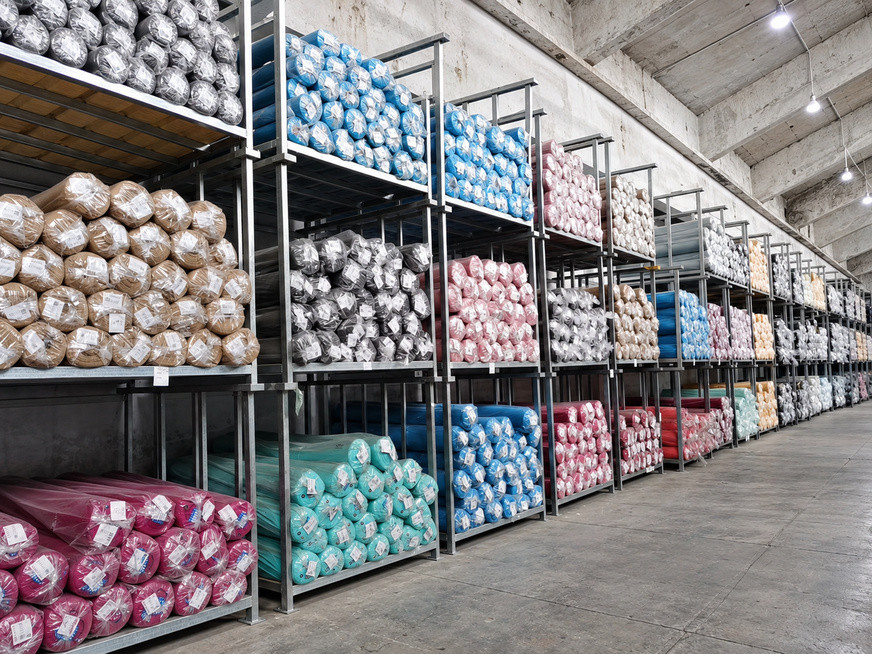
Approval is triggered by the approved product specification, not by how small the change feels. If a component sits in the approved BOM and the sealed sample, any deviation from it — supplier, construction, weight, shade or finish — is a substitution and needs a documented decision before it reaches cutting.
Three questions settle most cases quickly:
- Which approved requirements does this component touch?
- Who owns the decision — the brand’s product owner, not the factory’s purchasing team?
- What evidence already exists, and what is missing?
Keep the owner named in the project agreement. When approval rights are unclear, changes get made under time pressure and are discovered months later at receiving.
Fabric, elastic and cup changes that alter the approved product
| Change | What it usually moves | Typical approval level |
|---|---|---|
| Main body knit — same mill, new production lot | Nothing measurable if the spec and the physical reference still match | Incoming inspection; no re-approval |
| Main body knit — new supplier, same declared composition and weight | Hand feel, sheen, stretch power, pilling | Fabric tests + one garment on the base size |
| Elastane percentage or knit structure | Recovery, band tension, cup stability across the size range | Full revalidation + graded size set |
| Cup foam density or lamination | Support level, breathability, shape after washing | Fabric tests + wear trial + wash check |
| Strap elastic or hook-and-eye hardware | Comfort, strap slippage, adjustability | Fabric tests + wear trial |
| Dye lot, print or colourway trim | Shade, metamerism, colourfastness | Lab dip approval + fastness tests |
| Fiber content on the care label | Legal labelling and marketing claims | Labels and claims rewritten before release |
The pattern is simple: the closer a component sits to load-bearing or next-to-skin function, the more evidence the change needs.
Compare Original and Replacement Components
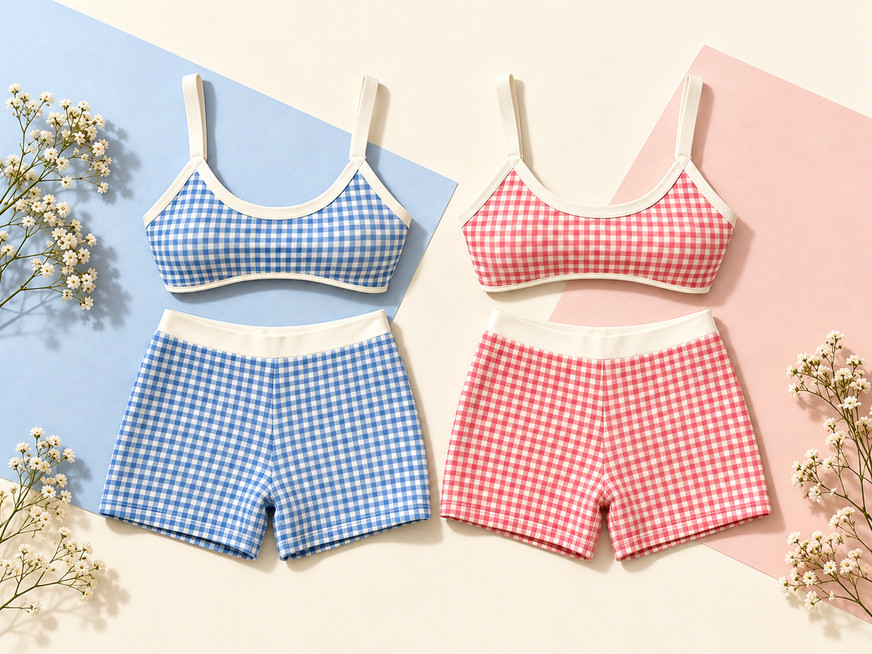
Build the comparison as a side-by-side record: the approved reference in one column, the candidate material in the other, and the missing evidence left visible. An honest gap is more useful than a completed form. Ask for at least three metres of the candidate fabric — enough for the lab tests and for a sewn trial — and keep both swatches in the project file until the change is closed.
Match identity, dimensions, recovery and appearance
| Check | What to record | Example field the record should carry |
|---|---|---|
| Identity | Fiber content, yarn type, knit structure, finishing route | Matches the declared spec and the reference swatch |
| Dimensions | Weight (g/m²) and usable width (cm) | Within the tolerance written in the tech pack |
| Stretch & recovery | Elongation at a fixed load, growth after repeated extension | Recovery comparable to the approved reference |
| Compression | Force at a defined extension, measured on the same gauge | Falls inside the reference band |
| Appearance | Shade difference, metamerism, surface, hand feel | Approved against the sealed colour standard |
| Fastness | Wash, rub, perspiration, light | Meets the grades already used for the style |
| Compliance | Restricted substances and certification scope | Certificate valid and covering the new material |
The values in the last column describe the fields a comparison record should carry. The numbers themselves belong to your tech pack and your material agreement — they are not a universal standard, and this article does not replace them.
Agree on Revalidation with a Custom Sports Bra Manufacturer
The revalidation matrix should be agreed once, in writing, and then applied without renegotiation every time a material runs short. Working with a custom sports bra manufacturer makes this easier, because the factory already holds the reference samples, the test reports and the sewing conditions that produced the approved garment — and its performance fabric development team can source and pre-test alternatives before a stock-out forces the decision.
| Risk level | Typical trigger | Evidence to repeat |
|---|---|---|
| Low | New production lot, same mill and same spec | Incoming inspection against the physical reference; no garment |
| Medium | New supplier, same declared composition and weight, non-critical component | Fabric tests + one sewn sample on the base size |
| High | Change in blend, weight, width, foam, elastic or hardware | Full test matrix + graded size set + wear trial + wash check |

Which sample and garment checks must be repeated?
Repeat what the change can move, and skip what it cannot. In practice:
- Always: shade approval against the sealed standard, and a check of stitch density and needle choice, because a different weight or modulus changes how a knit sews.
- When stretch or recovery moves: the graded size set, not just the base size — band and cup behaviour diverge across sizes.
- When foam, elastic or hardware moves: a wear trial on a defined panel, plus a wash-and-wear check for shape retention.
- When composition moves: care labels, fiber-content claims and any certification scope.
Sample and garment approvals are only as good as the system behind them, which is why brands normally fold this step into the activewear quality control routine rather than treating it as a one-off review.
One warning worth repeating from the production floor: matching fiber content does not prove equivalence. Two knits with identical declared content can differ widely in power at a given extension depending on yarn, structure and finishing. Treat the data sheet as a starting point, not a verdict.
Release the Change to the Custom Sports Bra Factory
Approval only becomes real when it is released in a form the factory floor can execute. A release record that lives in an email thread gets lost; one that is attached to the BOM travels with the order. Ask for the record before the first affected cut, not after.
What a release record should contain
- Change request ID, date and reason for the change
- Style, colourway and size range affected
- Component ID — approved reference versus replacement, with supplier codes
- Evidence pack references: test reports, lab dips, wear-trial notes
- Decision, plus any conditions attached to it
- Revalidation performed and the results achieved
- New BOM version and its effective date
- First affected purchase order, cut numbers or lot references
- Approver name, role and date
- Who holds the superseded physical reference swatches
BOM version, affected lots and written authorization
Version the BOM; do not overwrite it. If v3.1 becomes v3.2, keep both records so any garment produced under either version can be traced back to the materials actually used. Mark the superseded component line as obsolete so it cannot be picked for a later order, and record where the remaining stock of the old material sits and who may dispose of it.
Authorization should be written and specific: an email or system entry that names the approver, the BOM version and the first affected order. Verbal approval on the cutting floor is where traceability dies — and where a small substitution turns into a full-order dispute.

Frequently Asked Questions
Can a factory substitute a fabric with the same composition?
Not on composition alone. Fiber content tells you what a fabric is made of, not how it performs. Two knits with identical declared content can differ in weight, stretch power, recovery and hand feel — exactly the properties a support garment is sensitive to. A like-for-like substitution is acceptable when the new material is tested against the approved reference and the results are written into the change record. If you are unsure what your manufacturer may change without asking, ask them to state the boundary in the project agreement; that single sentence prevents most disputes.
Does every component change require a new garment sample?
No — but every change requires a documented decision. A new production lot from the approved mill and spec normally needs incoming inspection against the physical reference rather than a new sample. A change of supplier, foam density, elastic or hardware almost always justifies at least one garment on the base size, and anything that moves stretch, support or fit needs the graded size set and a wear trial. Put those triggers into the change procedure so the answer does not depend on who happens to be in the room.
About this guide
This guide follows the change-control workflow Bloomto uses in custom sports bra development, where a material change travels with the physical reference swatch, the test data and a signed release before bulk cutting starts. The approval levels shown are illustrative examples of the fields a comparison record should contain — they are not a specification, and they do not mean Bloomto accepts substitutions by default. Actual approval levels depend on the reference material, the intended support level of the style and the current project agreement. Where a change touches labelling, restricted substances or recycled-content claims, verify the current certificate before it goes on a garment.
Put the Decision on Record, Not on Trust
Material substitution is not a problem to avoid — it is a decision to control. Brands that keep an approved reference, a comparison record and a risk-based revalidation matrix absorb a fabric change in days. Brands that rely on goodwill and verbal approval find out at receiving.
Planning the next sports bra style?
Share your development requirements with Bloomto and review the next sample and manufacturing steps together.