
Private Label Leggings for Activewear, Gym & Yoga Brands
Private label leggings give a brand a faster route to market, but speed should not replace product evidence. A commercially useful program still requires a defined customer, suitable fabric, consistent fit, clear branding, realistic quantities and documented quality standards.
This guide explains how to develop private label activewear leggings for gym, yoga and workout collections. It uses current industry data, official EU policy information and peer-reviewed textile research to show why material traceability, fit testing and product-specific specifications matter. It also explains how Bloomto supports brands from product selection through samples and bulk production.
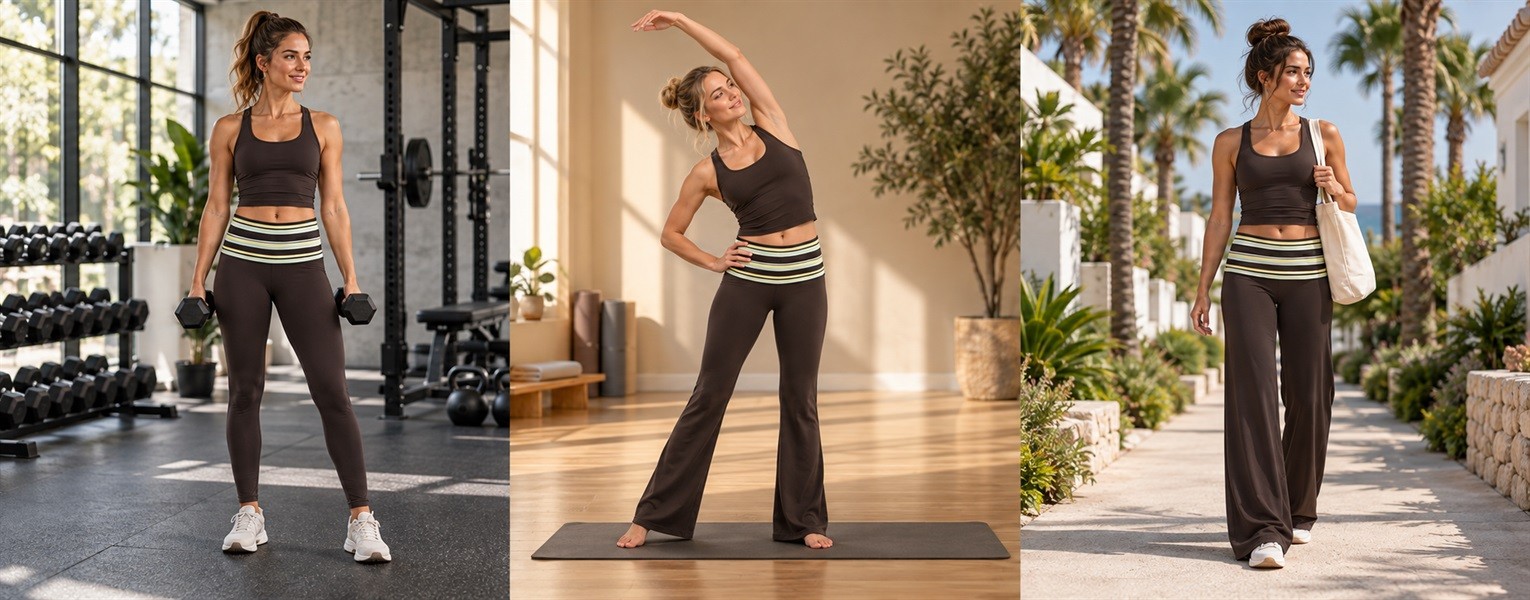
Quick Answer: How Do You Start a Private Label Leggings Line?
Define the target customer and use case, select a proven product base, specify fabric and performance requirements, choose colors and branding, confirm sizes and measurements, order samples, test fit and care, then approve a documented bulk standard. Plan quantities by style, color and size rather than discussing MOQ as one number.
Private label usually adapts an existing product foundation instead of developing every pattern and construction detail from zero. This can reduce development time, but the brand remains responsible for confirming that the selected product, claims, labels and market requirements are appropriate.
Why Brands Use Private Label Activewear Leggings
Private label activewear leggings can help a new brand test positioning without committing to a fully original product architecture. Existing product bases allow the development conversation to focus on commercially visible decisions such as fabric option, color, logo, label, packaging and assortment.
The route is most useful when the brand's advantage comes from customer community, merchandising, styling, service or a focused market position. Fully custom OEM development may be more suitable when the competitive advantage depends on an original fit block, patented feature or unusual construction.
| Development route | Product starting point | Typical customization | Best fit |
|---|---|---|---|
| Private label | Existing, manufacturer-developed base | Selected fabric, color, logo, labels and packaging | Brands prioritizing speed and controlled development |
| ODM | Manufacturer concept adapted with brand input | Silhouette, material, details and branding | Brands needing design and product-development support |
| OEM custom | Brand specification or original concept | Pattern, fit, construction, features and presentation | Brands requiring stronger product differentiation |
Bloomto's private label activewear manufacturing service helps brands compare these routes and choose a level of customization that fits the product idea, budget and launch schedule.
Material Reality: What Current Fiber Data Means for Leggings Brands
Most performance leggings rely on synthetic fibers because stretch, recovery, strength and moisture behavior are central to the category. The global material system remains heavily dependent on polyester. According to Textile Exchange's Materials Market Report 2025, global fiber production reached approximately 132 million tonnes in 2024. Polyester represented 59% of output, or about 78 million tonnes.
The same report estimates recycled polyester production at about 9.3 million tonnes in 2024, equal to 12% of the polyester market. It also reports that 98% of recycled polyester came from plastic bottles, while less than 1% of the total global fiber market came from recycled pre- and post-consumer textiles.
Global Fiber Market Snapshot, 2024
Source: Textile Exchange, Materials Market Report 2025. Bar lengths compare volumes with total global fiber output. “Mt” means million tonnes.
What this means for a private label program: “recycled” should not be treated as a complete sustainability claim. Ask for the exact fiber composition, recycled-content percentage, feedstock basis and available chain-of-custody evidence. Also assess durability and product life. The market data describes global supply; it does not prove that one specific fabric or garment has a lower impact.
Private Label Gym Leggings: Fabrics and Finishes That Sell
Private label gym leggings need stable recovery, secure waist fit and sufficient opacity during loaded movement. Start with the training environment. Strength sessions may favor a more supportive fabric and secure pockets. High-intensity classes may prioritize moisture transport and drying. Everyday gym-to-street use may place greater emphasis on surface feel and styling.
Do not approve a fabric only by composition or weight. A peer-reviewed study in Materials compared four elastic knitted fabrics for cycling sportswear and found meaningful differences in air, moisture, heat and drying behavior. In the reported tests, the selected 58/42 polyamide 6.6/elastane fabric achieved air permeability of 485 mm/s, an overall moisture management capacity of 0.61 and a drying time of about 16 minutes.
Reported air permeability for the study's selected 58/42 PA6.6/elastane fabric.
Reported overall moisture management capacity for that fabric.
Reported drying time under the study conditions.
Why the study matters: fabrics with similar category names can behave differently because of yarn, knit structure, density, weight, thickness and finishing. These laboratory numbers should not be copied into a product claim unless the actual bulk fabric is tested under the same method. They support a testing decision, not a universal benchmark.
Private Label Yoga Leggings: Fit, Waistband and Opacity
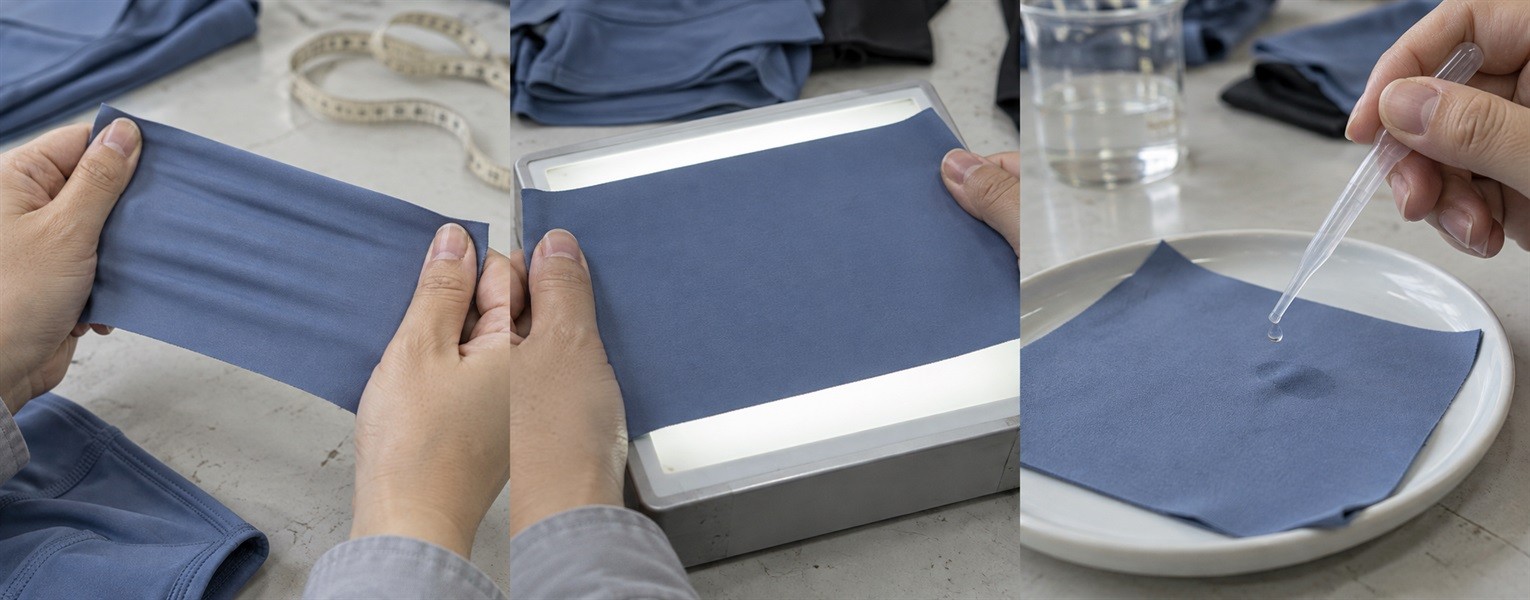
Private label yoga leggings should remain comfortable across bending, seated positions and sustained stretch. Review waistband pressure, rise, crotch shape, gusset, seam placement, ankle opening and fabric recovery. Test opacity in the actual color because light and saturated shades may behave differently.
Fit also affects e-commerce performance. A 2024 cross-country study in the Journal of Theoretical and Applied Electronic Commerce Research examined apparel returns among Portuguese and Czech consumers. Across the returning consumers studied, “wrong size” was the most frequently identified primary reason for a return. The authors also found significant between-country differences in several return reasons, showing that one market's behavior should not be assumed to represent every customer base.
This evidence supports a practical conclusion: private label does not remove the need for a brand-specific size chart and fit validation. Record garment measurements, define how the product is intended to fit and photograph the style on relevant body types. Use your own return reasons and customer feedback after launch to adjust the next order.
Brands can also review Bloomto's yoga leggings styles as starting references for waistband, length, pocket and surface-design decisions.
Fit Evidence to Prepare Before Launch
- Finished garment measurements for every offered size.
- Fit-model body measurements and the sample size worn.
- Movement tests for rolling, sliding, pressure and transparency.
- Wash and recovery observations against the approved sample.
- Clear product-page notes on compression, rise, length and stretch.
- A structured return-reason list that separates size, fit, quality and preference.
Private Label Workout Leggings for Training Programs
Private label workout leggings should be built around the movement and equipment they will encounter. Training products may need stronger seam construction, abrasion resistance, storage and a waistband that remains stable under repeated flexion. Studio products may prioritize soft touch and low-profile seams.
Convert each intended benefit into a specification or test. “Supportive” can become a defined fabric, waistband construction and fit assessment. “Durable” can become seam-strength, pilling and wash requirements. “Sweat-wicking” should be supported by an appropriate method and test result for the actual material instead of a generic fiber assumption.
For a first range, Bloomto can help brands select bases from our custom women's activewear collections and develop a controlled family of leggings, bras, shorts and tops.
Private Label Sports Leggings for Studios and Clubs
Studios, clubs and instructor programs often need recognizable branding and predictable replenishment more than a large number of styles. A focused program might use one legging silhouette, two colors and carefully positioned logos, with quantities allocated by actual member demand.
Confirm logo technique, dimensions, position, color and tolerance. Heat transfer, screen print, embroidery, woven labels and rubber badges behave differently on stretch fabrics. The selected method should remain comfortable and stable through wear and washing.
Keep repeat-order records for fabric, color, pattern, measurements, labels and packaging. A reorder is not truly repeatable if these details exist only in messages or visual references.
Planning a Private Label Leggings Program?
Send Bloomto your target customer, use case, reference styles, fabric direction, colors, size range, branding, quantities, destination and launch date. We will review the information and explain a realistic sampling and production route.
Plan Your Private Label LineAdding Edge With Private Label Seamless Leggings
Private label seamless leggings can use engineered rib zones, contour structures and reduced seam construction to create a distinct performance look. The production route differs from conventional cut-and-sew leggings, so pattern logic, minimums, sample timing and artwork options may also differ.
A 2026 peer-reviewed study in Textiles found that yarn material, number of yarns and loop length affected pressure, stretchability and thermal properties in seamless knitted compression fabrics. The result reinforces an important development principle: compression is not determined by fiber content alone. Knit structure and production settings also matter.
Ask how seamless pressure and stretch are controlled across sizes, how engineered zones are graded and which measurements will be used for approval. Test the finished product on the intended body range rather than relying only on a flat visual review.
MOQ, Samples and Timelines for a Private Label Program
There is no credible universal MOQ for private label leggings. Minimums can apply separately to garment style, fabric, custom color, logo, label and packaging. Stock components may support lower starting quantities, while custom dyeing or engineered seamless programs can require larger commitments.
Confirm customer, product roles, styles, colors, sizes and target quantities.
Separate stock options from custom fabrics, colors and trims with their own minimums.
Include branding, labels, packaging, testing and delivery assumptions.
Review fit, movement, opacity, recovery, workmanship and care performance.
Seal measurements, material, color, construction, logos and packaging in writing.
Set reorder triggers against sell-through, stock cover and the full production lead time.
Ask the manufacturer for milestone ranges rather than one undifferentiated lead time. Product selection, material confirmation, logo setup, sample revisions, bulk production, inspection and transport are separate stages. Delays often begin when decisions or approvals remain open.
Traceability and EU Market Planning
Brands selling into the EU should expect increasing demand for structured product information. The European Commission's Digital Product Passport page for textile apparel identifies textiles as a priority group under the ESPR Working Plan 2025–2030. It states that the textile-specific delegated act is planned for adoption in Q4 2027, while noting that timing may evolve.
The Commission says future textile DPP information may include product identification, fiber composition, care, repair, reuse, recycling, origin and relevant economic operators. Exact requirements are still being developed. Brands should therefore avoid claiming that a current internal file is already “DPP compliant.” A more defensible action is to organize supplier, composition, testing, care, labeling and production records so that future requirements can be addressed efficiently.
Source: European Commission. The published timeline is indicative and may change.
The policy direction is connected to a measurable waste problem. The Commission's EU Strategy for Sustainable and Circular Textiles reports that about 5 million tonnes of clothing are discarded each year in the EU, approximately 12 kg per person, while only 1% of clothing material is recycled into new clothing.
These figures do not prove that one private label collection is sustainable. They explain why durability, traceability, restrained assortment planning and accurate claims deserve attention during development.
Frequently Asked Questions
How Do I Start a Private Label Activewear Leggings Line?
Define your customer and product use, choose the appropriate private label base, confirm fabric and performance requirements, select colors and branding, approve size specifications, test samples and document the bulk standard. Build the order by SKU and reserve budget for development, delivery and reorders.
What Makes Private Label Leggings Different From OEM Customization?
Private label normally begins with an existing product foundation and applies selected brand changes. OEM customization follows a brand's original specification and generally provides more control over fit, construction and features, with additional development work. The exact service boundary varies by manufacturer, so confirm it in writing.
Can Recycled Polyester Make a Legging Sustainable?
Recycled content is one material attribute, not proof of overall sustainability. Verify the percentage, source and certification, then consider durability, chemicals, production, logistics, care and end-of-life. Use claims that match documented evidence for the actual product.
Develop Your Private Label Leggings With Bloomto
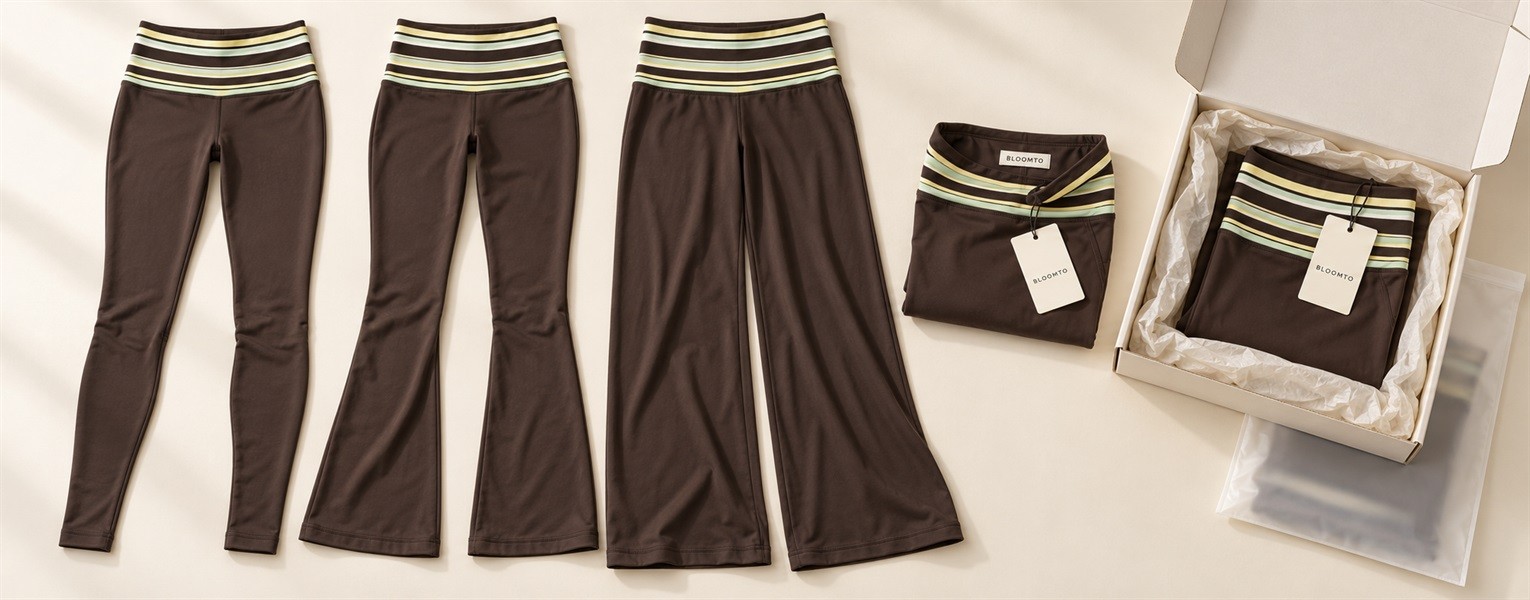
Bloomto supports activewear brands with product selection, fabric sourcing, color and branding development, samples, labels, packaging, bulk production and quality management. Our custom yoga wear line can also support coordinated leggings, bras, shorts and tops.
Send the information you already have. Reference products, target customer, activity, price, quantity, sizes, colors, logo files and launch timing are enough to begin a practical project review.
Send Bloomto Your Private Label BriefReady to Plan a Private Label Leggings Line?
Share your product direction, expected quantities, branding, target market and launch date. Bloomto will review the project and outline the next steps toward samples and production.
Contact Bloomto for a Project ReviewEvidence Sources
- Textile Exchange, Materials Market Report 2025.
- European Commission, EU Strategy for Sustainable and Circular Textiles.
- European Commission, Textile Apparel and the Digital Product Passport.
- Teyeme et al., Comparative Analysis of Thermophysiological Comfort-Related Properties of Elastic Knitted Fabrics for Cycling Sportswear, Materials, 2020.
- Magano et al., Exploring Apparel E-Commerce Unethical Return Experience: A Cross-Country Study, Journal of Theoretical and Applied Electronic Commerce Research, 2024.
- Li, Kwan and Yick, Effect of Material, Number of Yarns, and Loop Length on Pressure, Stretchability, and Thermal Properties of Seamless Knitted Fabrics for Compression Textiles, Textiles, 2026.

