Custom Leggings Manufacturer for Brands: An OEM & ODM Project Workflow
OEM & ODM PROJECT GUIDE FOR ACTIVEWEAR BRANDS
A custom leggings manufacturer for brands should do more than sew an approved pattern. The right partner helps translate a commercial idea into a controlled product specification, then carries that specification through sampling, branding, bulk production and repeat orders.
This guide explains that workflow from the brand side. It focuses on the decisions, documents and approval gates that keep a leggings project aligned—not on a generic factory tour. Use it to decide whether OEM or ODM fits your project and to prepare a cleaner handoff to your manufacturing partner.
What a Custom Leggings Manufacturer for Brands Actually Handles
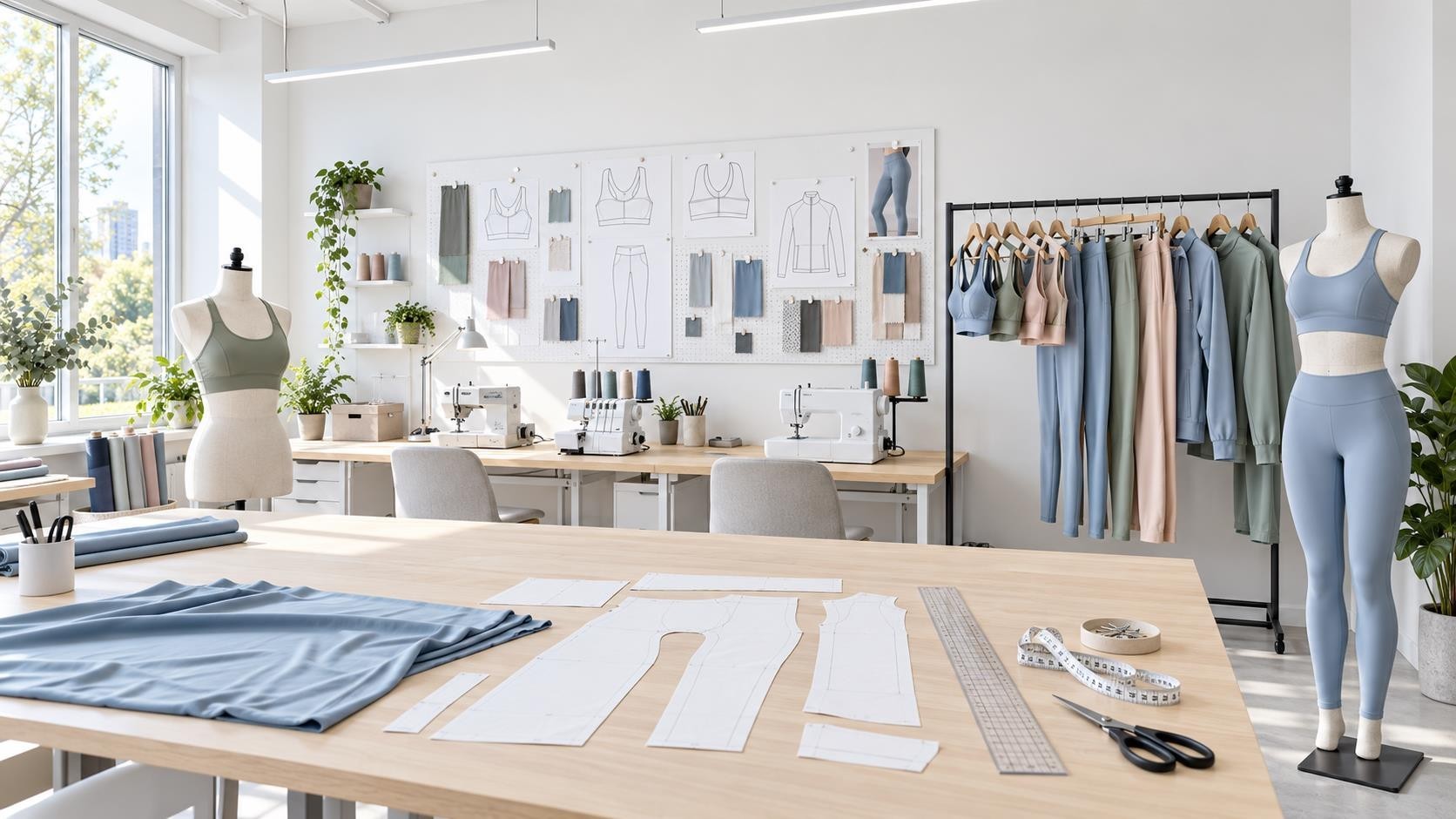
The factory’s visible output is a garment, but the real project contains several connected workstreams. A capable partner should help your team control product definition, technical development, sourcing, sampling, brand applications, production preparation and quality verification.
For leggings, small specification changes can influence several outcomes at once. A higher waistband changes pattern proportions. A pocket changes seam placement and may affect stretch. A new logo method can require a different application temperature. A lighter fabric may need revised opacity testing. The manufacturer therefore needs to treat your product as a system rather than a collection of isolated requests.
Brand inputs
- Target customer and intended activity
- Target price position and launch calendar
- Reference products, sketches or tech packs
- Required size range and sales markets
Manufacturer outputs
- Feasibility review and development plan
- Fabric, trim and construction proposals
- Samples, revision records and approvals
- Bulk controls, inspection and packing records
Before shortlisting a partner, review the scope of its custom leggings manufacturing service for brands. Ask which steps are completed in-house, which are coordinated through approved suppliers and who owns each approval.
OEM vs ODM Workflow: Which Service Does Your Brand Need?
OEM and ODM are not quality levels. They describe where product development begins and how much of the product definition comes from the brand or the manufacturer.
| Decision point | OEM leggings project | ODM leggings project |
|---|---|---|
| Starting point | Your tech pack, sketch, sample or proprietary concept | An existing factory style, pattern library or development direction |
| Brand control | High control over construction, measurements and details | Focused control over selected fabrics, colors, branding and revisions |
| Development workload | More technical decisions and approval checkpoints | Faster product definition when the base style is suitable |
| Best fit | Brands with a differentiated fit, function or visual identity | Brands that need a structured starting point or faster range expansion |
A hybrid approach is also common: the brand selects an ODM base, then requests OEM-level changes to the pattern, waistband, pockets or fit. The important issue is not the label. It is whether all approved changes are transferred into one production-ready specification.
Building a Collection With a Custom Leggings Manufacturer
A collection should be planned as a connected range rather than as unrelated samples. Start with a clear product architecture: identify the hero style, supporting styles, color families and the customer problem each product solves.
For example, one base fit may support a clean studio legging, a pocket version and a higher-compression training version. Shared components can simplify development, but only when the performance requirements genuinely match. A studio fabric should not be carried into a high-abrasion training style simply to reduce complexity.
- Define the use case. Specify yoga, gym, running, recovery or lifestyle use before selecting materials.
- Build the line plan. Assign a role to each style and remove duplicate products before sampling.
- Lock shared standards. Establish common size charts, color references, logo rules and packaging architecture.
- Separate variable specifications. Record the fabric, construction and testing needs that differ by style.
- Approve by gate. Do not allow an unresolved component to travel into the next project stage.
If your brief is still visual rather than technical, review the manufacturer’s designing ability for OEM projects and ask how reference images are converted into original measurements, construction notes and fit standards.

Logo Programs: Working With a Custom Logo Leggings Manufacturer
A logo is part of the garment engineering, not a final decorative afterthought. Placement, scale, stretch direction, application method and fabric surface all influence the result. A small mark near a highly stretched seam behaves differently from the same mark on a stable waistband panel.
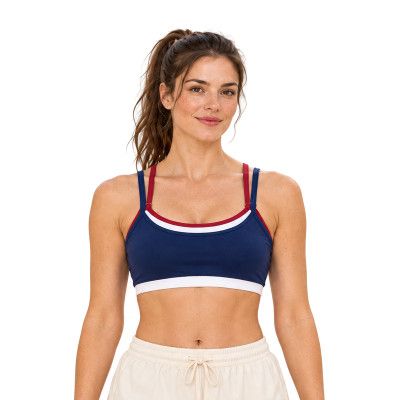
Give your custom logo leggings manufacturer vector artwork, color references, placement measurements and acceptable tolerances. Ask for a strike-off or logo application sample on the actual production fabric. Review it both relaxed and stretched, then record the approved method in the specification.
- Heat transfer: useful for fine artwork, but application settings must match the fabric.
- Silicone or rubber badge: creates dimension, while weight and edge comfort require review.
- Embroidery: offers texture but may not suit highly elastic or body-hugging zones.
- Screen print: suitable for selected graphics when ink, stretch and placement are compatible.
Labels, Care Tags and Packaging From a Custom Label Leggings Manufacturer
A custom label leggings manufacturer should coordinate branding details with the same discipline used for the garment. Main labels, size labels, care labels, hangtags, polybags and outer cartons form one information system. If one component changes, the bill of materials and packing instruction should change with it.
Provide final approved artwork rather than screenshots. Confirm label dimensions, fold type, attachment position, language requirements and care content with the markets where the product will be sold. Regulatory content is the brand’s responsibility, so review it with qualified advisers for each destination before approval.
Approval gate: branded components
Do not approve bulk trims from artwork alone. Review physical or production-representative samples for color, legibility, softness, attachment and compatibility with the garment.
Production Roadmap for a Leggings Manufacturer for Clothing Brands
A reliable roadmap connects commercial timing with technical readiness. The sequence below helps a leggings manufacturer for clothing brands keep the project moving without treating a calendar date as permission to skip an approval.
Brief and feasibility
Confirm product purpose, design ownership, target market, requested quantities and essential launch dates.
Technical definition
Review the tech pack, patterns, measurements, fabric, trims, branding and test expectations.
Sampling and fit
Build the prototype, collect structured comments and close every revision with a version number.
Pre-production approval
Freeze the approved sample, color, components, packaging and production specification.
Bulk and inspection
Control incoming materials, in-line workmanship, measurements, final appearance and packing.
Reorder learning
Capture returns, fit feedback and sales data so the next order begins from a better standard.
Reviewing the factory’s manufacturing capability for bulk programs helps your team verify whether the required construction and decoration processes fit the proposed route.
How an OEM Leggings Manufacturer Manages Sampling and Bulk
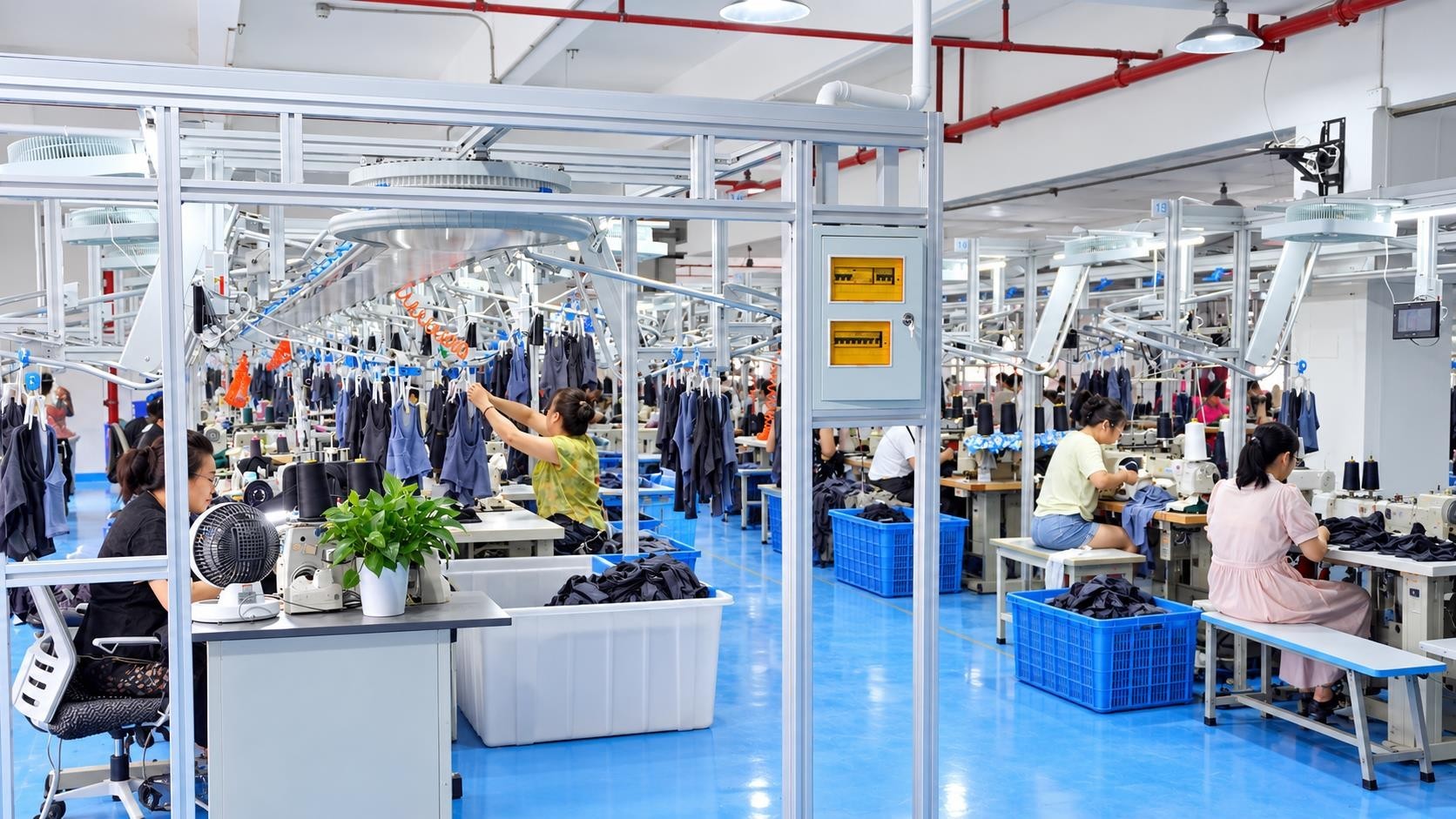
The sample room proves the product definition; the production floor proves repeatability. An OEM leggings manufacturer should maintain a visible connection between the two.
Use one consolidated comment sheet for every sample round. Separate objective corrections—such as waistband height or pocket opening—from subjective impressions such as “make it feel more premium.” Translate subjective feedback into measurable decisions wherever possible. Each revision should identify the sample version, requested change, responsible party and approval status.
Before bulk production, build a pre-production file containing the approved sample, measurement chart, bill of materials, color standards, logo placements, workmanship details, packing instructions and test requirements. Any late change should be documented, costed and reapproved rather than communicated through an isolated chat message.
Fit approval
- Waist stability during movement
- Rise, hip, thigh and inseam balance
- Opacity and coverage in relevant poses
- Seam comfort and mobility
Bulk control
- Incoming fabric and color checks
- Measurement and workmanship checkpoints
- Branding and label verification
- Final inspection and packing review
Ask how the supplier connects approvals to its quality management in bulk production. The goal is not more paperwork; it is a traceable answer when a result differs from the approved standard.
Scaling From First Order to Repeat Programs
The first order creates the operating standard for future seasons. Protect that value by keeping the approved pattern version, fabric reference, color standard, trim records and inspection findings together. A reorder should not depend on someone remembering what changed months earlier.
After launch, feed customer returns, reviews and sell-through information back into product development. If customers praise softness but report waistband movement, preserve the fabric experience while revisiting waistband tension, height or internal construction. If one color produces more complaints, investigate dye lot, opacity and finishing variables before changing the whole style.
As volume grows, decide which elements must remain fixed and which can vary by season. Stable fit blocks and grading rules can support faster development, while color, print and selected details create freshness. This is how a one-off custom order becomes a repeatable manufacturing program.
Frequently Asked Questions
What information does an ODM leggings manufacturer need to quote?
An ODM leggings manufacturer typically needs your target customer, intended activity, preferred base styles, fabric direction, size range, color count, branding requirements, packaging needs, quantity by style and target delivery window. A complete brief helps the supplier distinguish confirmed requirements from optional ideas.
How long is a typical OEM project with a custom leggings manufacturer?
There is no responsible universal timeline. The schedule depends on design readiness, fabric availability, sample revisions, testing, branded-component development, order size and production capacity. Ask for a milestone plan with dependencies rather than one unsupported delivery promise.
Do custom leggings manufacturers for brands offer design help?
Some do. Support may include concept refinement, sketches, tech packs, pattern development, fabric recommendations and sample revisions. Confirm what is included, who owns the final files and which approvals remain your responsibility.
Prepare a Better Handoff to Your Manufacturing Partner
A strong OEM or ODM project is built on clear ownership and staged approvals. Define the product, choose the right development model, control every sample revision and freeze the complete specification before bulk production.
If you already have a tech pack, reference sample or collection brief, you can submit your tech pack for review so the project can be evaluated against the intended use, branding requirements and production route.